
Erythronium americanum
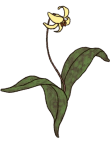
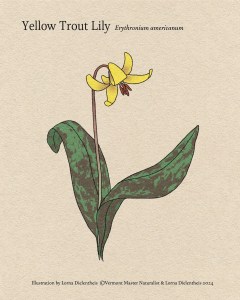
Yellow Trout Lily’s green and brown leaves, mottled like the brook trout the plant is named after, have emerged from the leaf litter. If you spot one, look around and you’ll undoubtedly see many more.
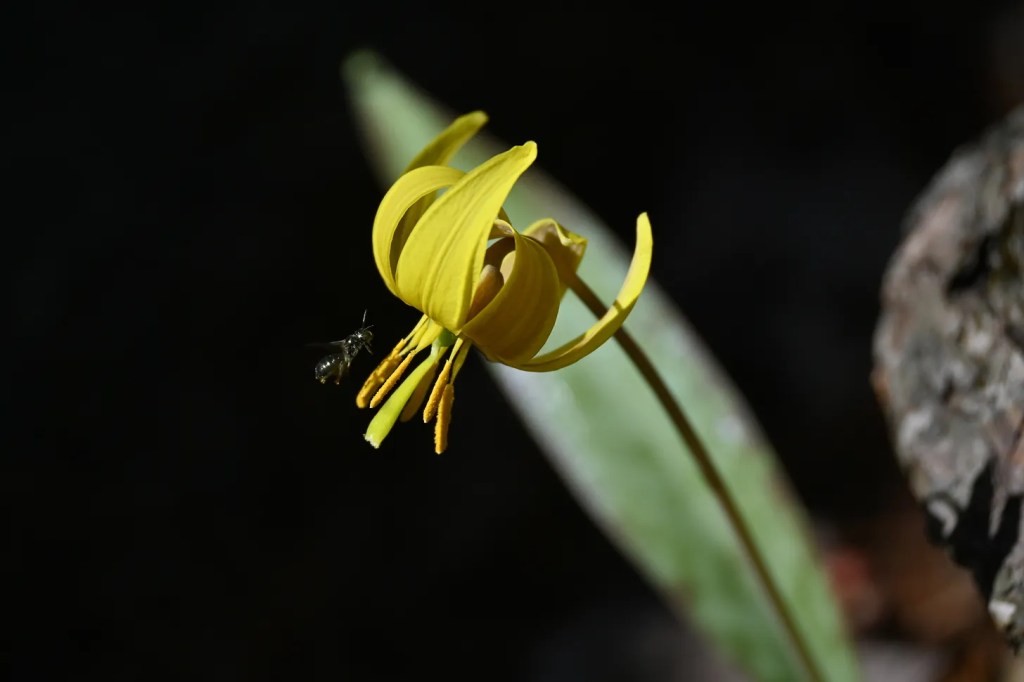
A Ceratina bee visiting a yellow trout lily
Trout lilies reproduce primarily asexually through shoots called stolons. These horizontal stems grow just along the soil surface, emerging from one bulb and reentering the soil to form a new plant. You’ll often see these stolons in the summertime, after the rest of the plant has died back. They look like little white worms snaking their way in and out of the forest floor.
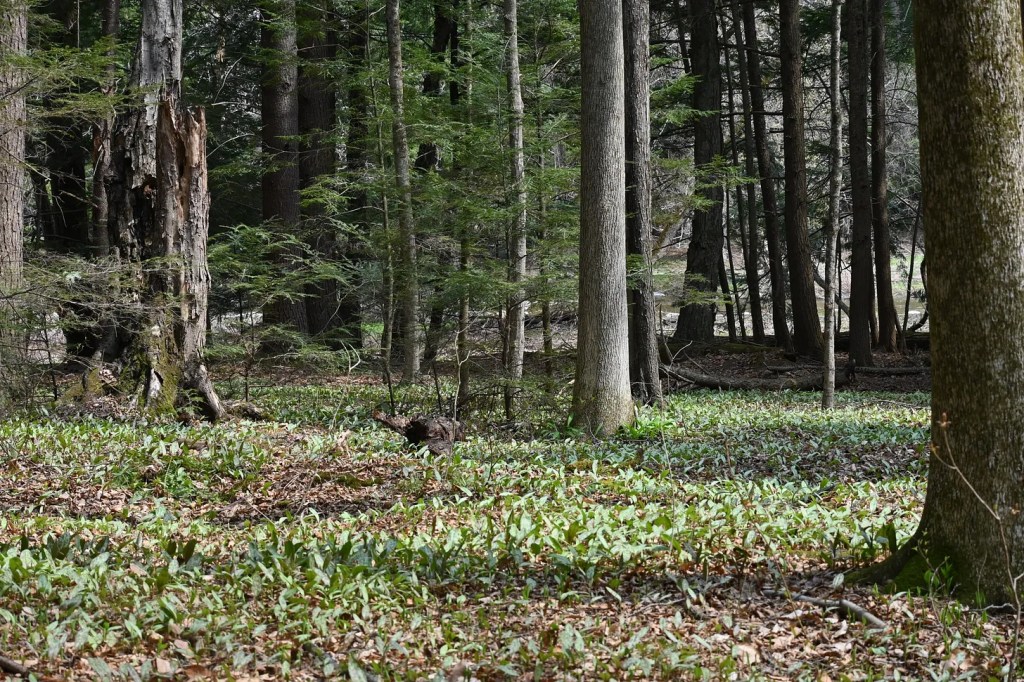
One of my favorite trout lily colonies
Trout lilies can (and do) reproduce sexually too, their sexual reproduction just isn’t as successful: only about 10% of pollinated flowers develop seeds. Because of this, they tend to form large clonal colonies of genetically identical individuals. Like I said, where you see one trout lily, there are almost certainly going to be many more.

Within these large colonies, however, only a small percentage of individuals bloom each year— somewhere around 0.5%, or 1 in every 200 plants. It can take an individual seven years to bloom. You can tell if an individual will produce a flower that year by the leaves: plants that are going to flower produce two basal leaves, and plants that won’t have just one upright leaf.
The few seeds that are produced are distributed through a mutualistic relationship with ants called myrmecochory— see my previous post on Hepatica for a description of this.
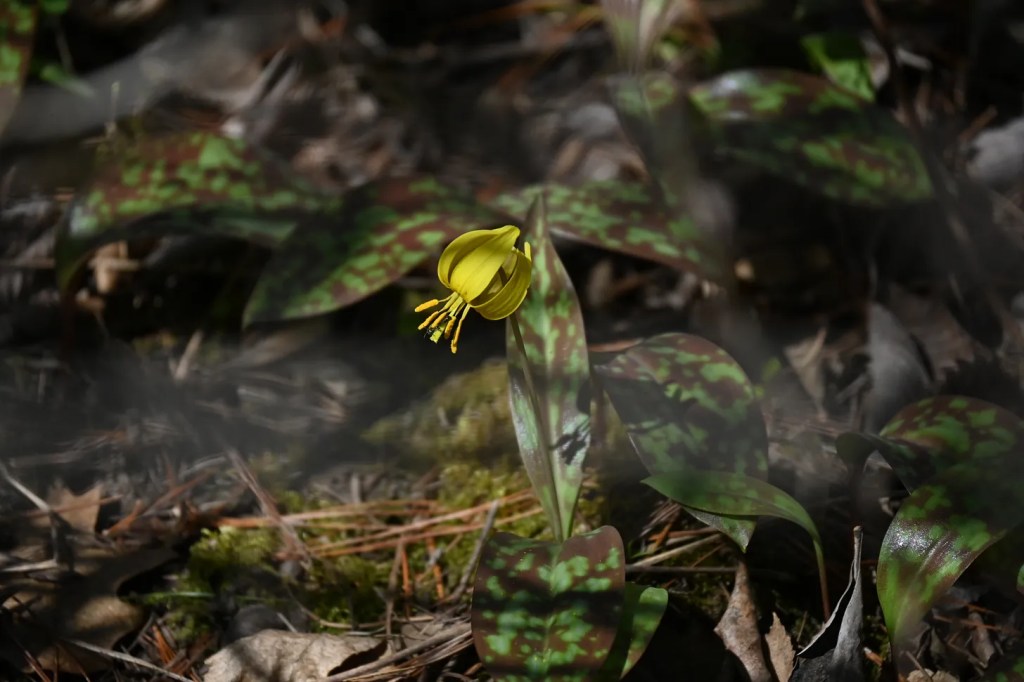
see the bee?
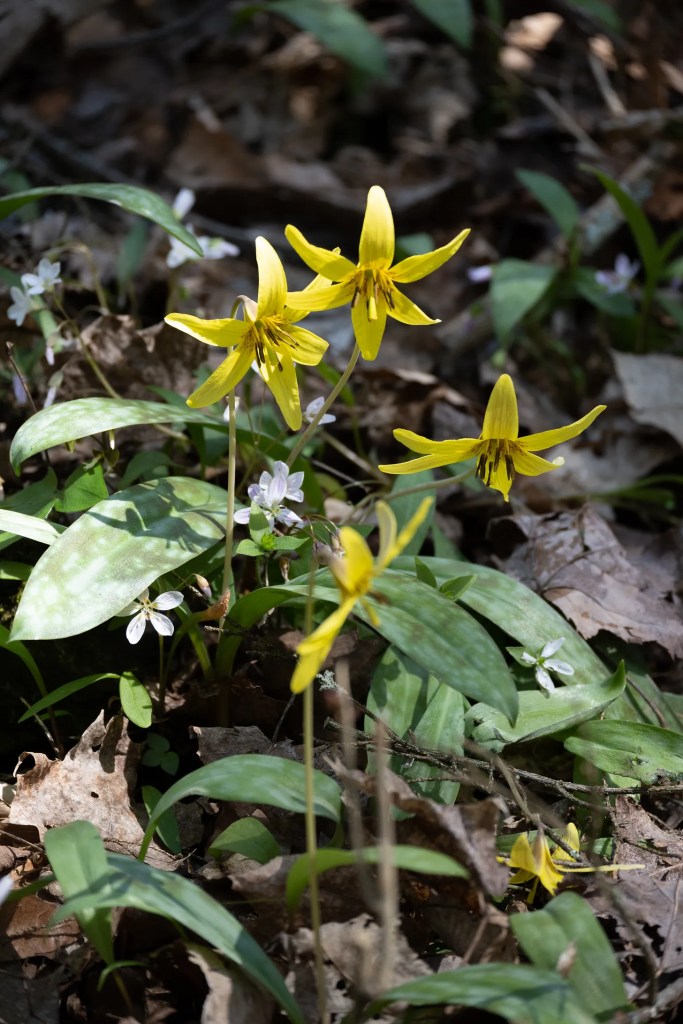
Yellow Trout Lily’s pollen, like that of all ephemerals, is an essential source of food for early pollinators. Their stamens range in color from yellow to a deep, rusty red. In my observation, all of the trout lilies in a colony will have the same color of stamen, I’m guessing because of them being mostly genetically identical.

Varying stamen/pollen colors (these are plants from two different locations)
A yellow trout lily colony is a thing of beauty: the bright yellow flowers are a flash of color within the drab early spring landscape. The dappled leaves mimic the dappled sunlight that reaches them through the canopy’s still-bare branches. Their petals close in cooler weather and then, like magic, curl back— a golden crown embracing the sun. They take my breath away.
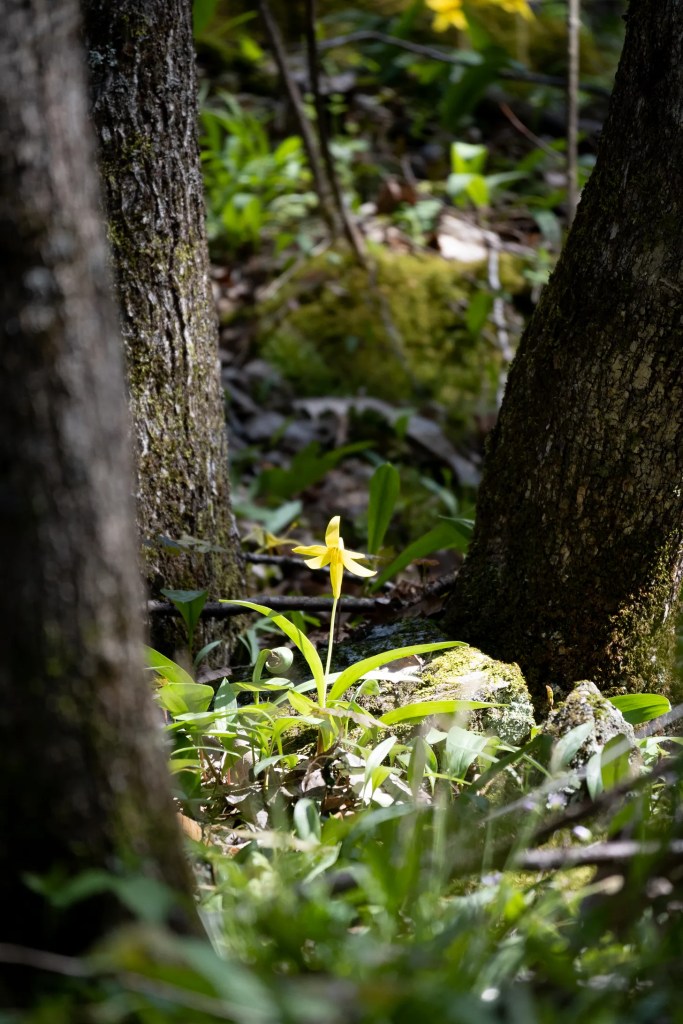
gosh is there anything more beautiful?
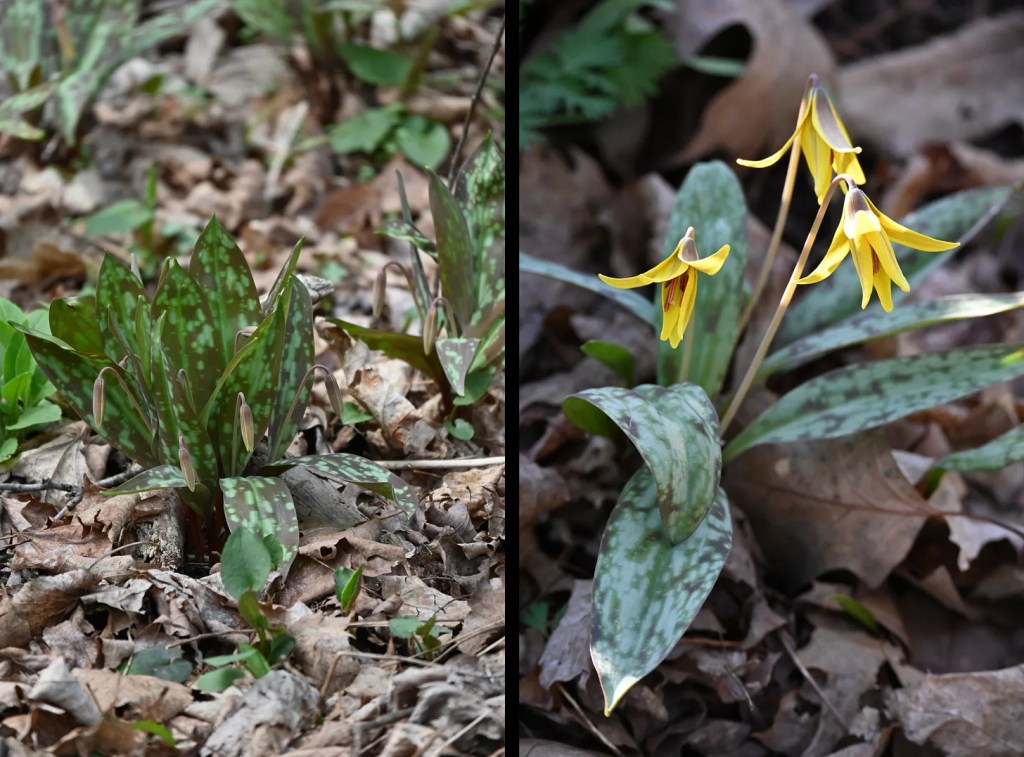
left: about to bloom, right: opening back up as the sun comes out
All photos and illustrations are my own.
Note: This is the sixth in a series of posts on spring ephemeral wildflowers. Previous posts:
This post was originally published here.

