
By Leslie Spencer, VMN Lower Winooski participant 2024
As spring unfolds before our eyes, there is so much for us to tune into—moments of joy amidst the State Of The World. This week, it’s frogs, flowers, and BEES! Tuning into these happenings in the natural world gives me renewed energy to tackle what’s ahead.
This weekend, I had the pleasure, for the second to last time, to gather with my Vermont Master Naturalist cohort to learn about cultural geography in Vermont from Sam Ford. Think, quarries, barns, ancient land laws, etc. More on that later!
We made our way around Burlington, learning about hidden cultural stories on the landscape. And, as a group of twenty-some curious naturalists, we can never focus on one thing for too long. There is so much to pay attention to!
On our way to visit an abandoned quarry in Arms Forest – once an important source of building materials for our area and beyond – we couldn’t help but ask each other, “What’s that sound?” We could hear a white noise in the distance, neither the hum of cars on the beltline nor the chorus of spring peepers. What could it be?
On our way back to the cars after the quarry visit, we wandered off the trail to a vernal pool – temporary, shallow pools that appear in the woods in the spring that serve as essential breeding sites for amphibians. As we approached the pool, the sound grew louder and louder, and our gaggle of chatty naturalists grew quieter and quieter.
Behold, the song of wood frogs:
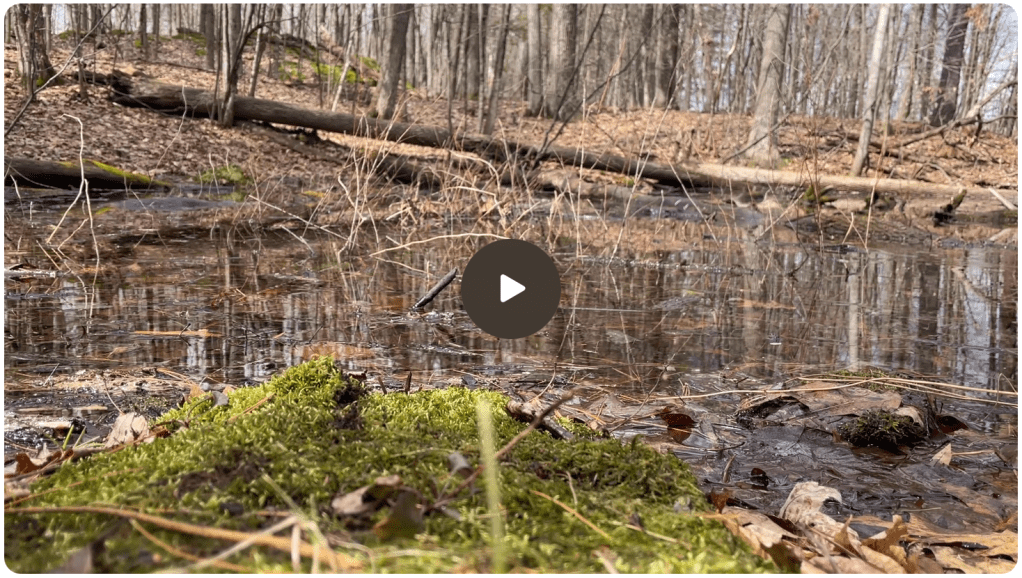
I crouched on a mossy log, took a few deep breaths, and started to lose track of time—until my bliss was interrupted by the sound of oohing and aahing off to the right. A friend in tall boots had ventured into the pool to scoop up some eggs for us to see up close.
More bliss. Behold, fresh wood frog eggs:
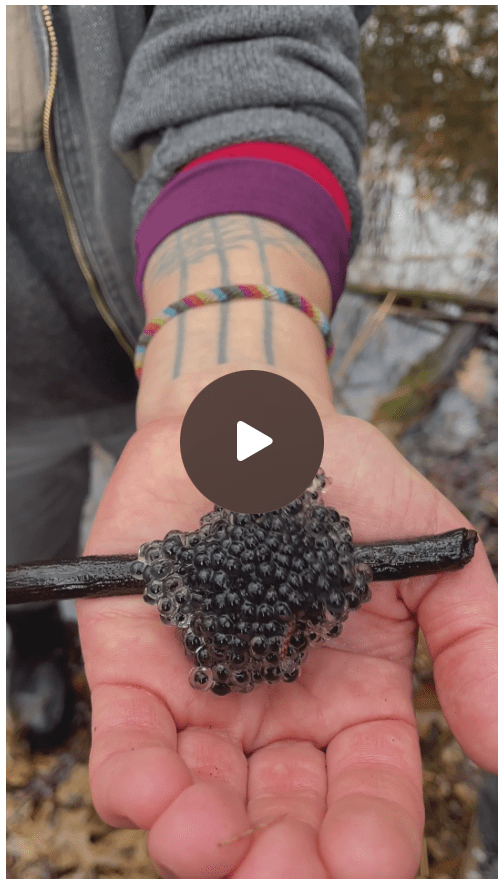
If jiggling a bunch of frog eggs does not ignite your child-like sense of wonder, I do not know what will.
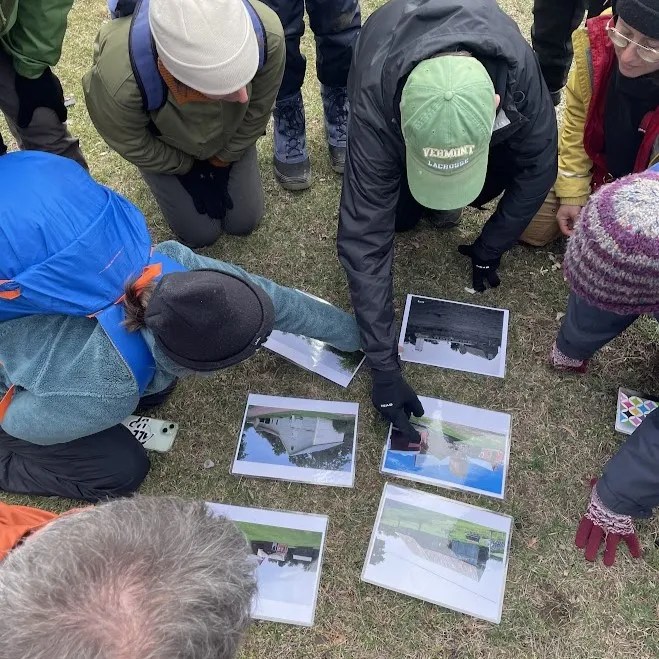
Later, we made our way across North Ave to Ethan Allen Park to learn more about the cultural history of Burlington. We started with an activity: given six photos of Vermont barns, we had to line them up from oldest to newest (a lesson on barn history followed). Feeling very out of my element, I opted to take the below photo of my team doing their darndest to accomplish the task at hand:
As if the frog song and jiggly eggs weren’t enough spring magic for one day, despite still being bundled in puffy coats and knit hats, the first bee of the season appeared. It landed right on one of our barn handouts. Impromptu bee lesson time! It was a male cellophane bee – typically the first bee species to emerge in Vermont each year, a true harbinger of spring. Always a joy-filled moment to know they’re back.
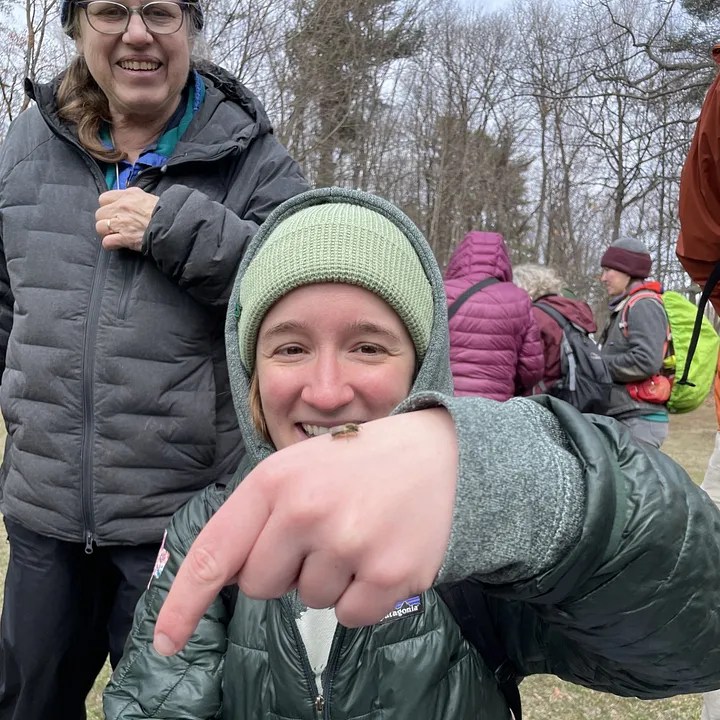
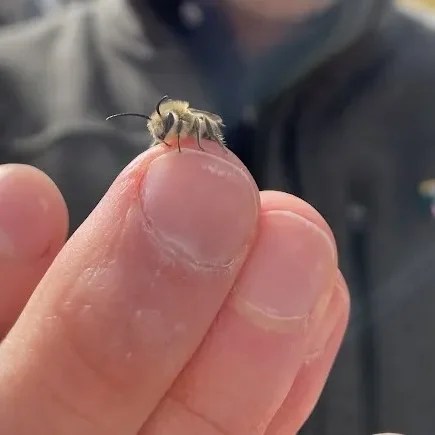
Left: Impromptu bee lesson time! A male cellophane bee (Colletes inaequalis) is perched on my hand. Thanks Lena for capturing this show and tell moment! Right: An up-close shot of the same kind of bee, this time, last spring.
Following the barn activity, up the hill we went, to learn about the local dolostone that went into building the tower at the high point of the park. Just below the tower we stumbled upon a cluster of hepaticas – other than skunk cabbage, the first wildflowers of the season.
Already high on the joy of wood frogs and cellophane bees, the hepaticas served as the cherry on top of a day of early spring magic. A “big dopamine hit,” as my friend Nick would say.
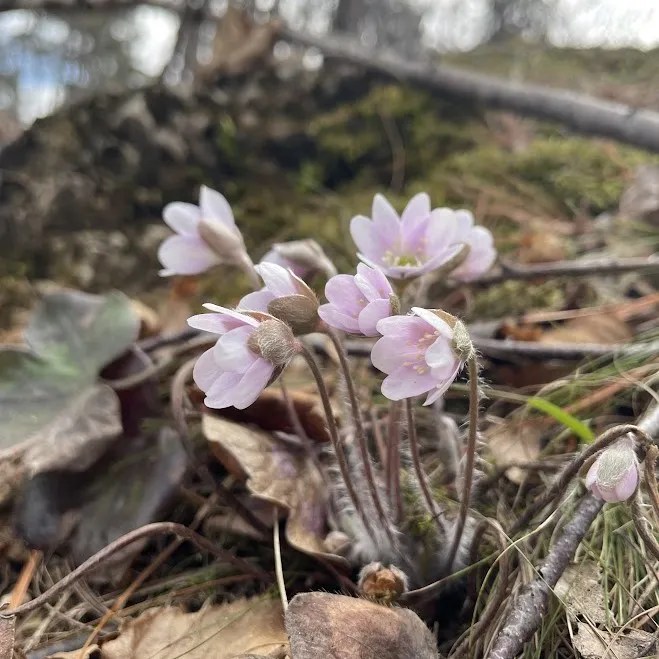
Round-lobed hepaticas (Hepatica americana) emerging just downhill of the Ethan Allen Park tower. Aren’t they perfect?
This is now my third spring in Burlington, and I’ve been finding so much joy and comfort in learning the rhythms of the season’s return. Each year, I’m getting better at knowing how—and where—to look for signs of hope.
It feels like a gift to witness so much spring magic within the urban wilds of our city—frog song from vernal pools, native bees emerging, ephemeral wildflowers blooming. As I mentioned in my last post, spotting familiar flowers in Colorado last week felt like a comfort and also a push of energy in an unfamiliar moment.
All photos by Leslie Spencer unless otherwise noted.
This post was originally published here.


 Vermont Master Naturalist Program