Blog

Wild Heart of Place: The Making of Vermont Master Naturalist

By Alicia Daniel, Director of Vermont Master Naturalist. This is a reflection on the origin of VMN.  It starts with her own journey to become a naturalist. 
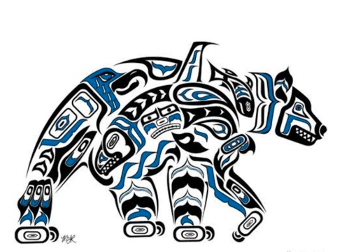
Photo: © Merlee’s Moods merleesmoods.com

No one becomes a naturalist by accident. It doesn’t happen because your guidance counselor suggests it’s a good idea. Ask any naturalist. Blazing their own trail will be at the heart of their story. 

My “career path” began in the forests, fields, and riversides of Montana, with me watching beavers while my dad and siblings fished for trout or fell into the stream. It took another 20 years to arrive at anything

resembling a trail head. It was a winding path with no map and plenty of dead ends.

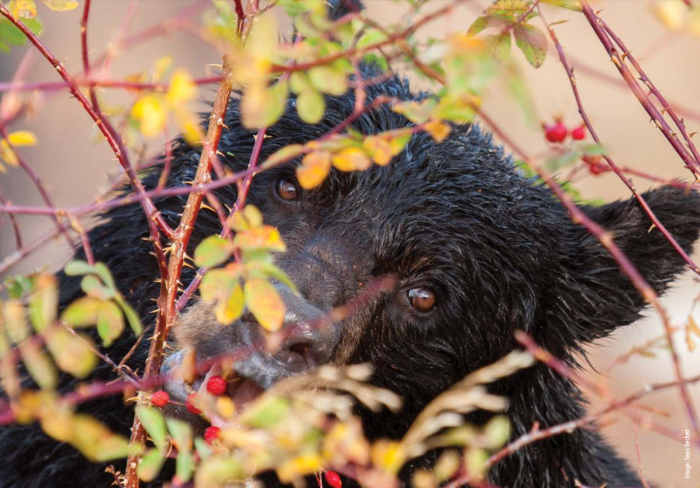
And yet I woke up as a naturalist on an island in Bear Track Cove, Alaska, the summer I turned 28. Yawning from lack of sleep—in the middle of the night, the shush, shush of my eyelashes brush-ing against my sleeping bag sounded like a bear walking around outside my tent—I made my way down to the beach. I’d traveled to Alaska to track black bears. I was, at best, a novice tracker. But when I came upon a set of large pawprints with the mud gooshing up between the five toes, I knew they were fresh and I knew they were bear. I looked across the mudflat that now connected me to the mainland to discover (a) I was not on an island, and (b) the bear tracks led right to a black bear. Backlit by the rising sun, a halo of fur glowed around his head. I stood up, shook off my jacket, and waved it around, as I’d been told to do. He started walking toward me. Black bears in Glacier Bay defend their salmon streams against brown bears, which is to say they are big. Clearly there were safer places to be.

My journey to Alaska actually began a year earlier. After landing my dream job in Austin, Texas, with Bat Conservation International, I’d helped them move from Milwaukee to Austin, overseeing the installation of the phones and watching with pride as workmen bracketed bookshelves to the field station’s freshly sheetrocked walls. I loved the perks of field work, like a trip to Bracken Cave where 20 million Mexican free-tailed bats emerged at sunset like a black tornado. But it was my first day in the new office and I now had an in–person boss and the honeymoon was over. I was sitting at my desk feeling cooped up and claustrophobic, when I heard a metallic rending sound above me that made my hair stand on end. A fully loaded shelf of books torn off the wall, one end hitting a filing cabinet to my right forming a triangular cave with the floor. As I threw myself sideways into this shelter, a thousand pounds of books and shelves crashed down where I had been sitting. I rose up out of the rubble with sudden and sweeping resolve: I was not going to die at a desk slipstreaming behind some famous naturalist. I was going to be a naturalist—or at least die trying.  

Every 27 to 29 years, the planet Saturn returns to the sign it was in when you were born. In astrological lore, Saturn is the great taskmaster. He breaks you down, makes you lift heavy weights, so you can get into fighting shape. In my 28th year, I left Bat Conservation International, leapt from an English degree into a Master of Science program, crawled through a flooding cave for my “interview,” moved to Vermont where I figured out how to dress in winter layers (not one big bulky sweater), learned to cross-country ski to the amusement of my peers so I could follow moose through willow thickets in Wyoming, fended of unwanted advances from men who were hired to teach me, and much more. By the time I met up with that black bear, I was in fighting shape. As he stared me down, I slipped quietly into the forest. But later my friend, Michele, and I came back to steal one of his salmon for dinner.  

After my encounter with the bear, I got married and spent the next 29 years as a mild-mannered university lecturer raising two children and working part-time as a naturalist. Then, one day when I was walking in the Vermont woods with students, we came upon a black bear skull. 

By this time, I had found porcupine skulls, beaver skulls, deer skulls, seal skulls, mouse skulls, raccoon skulls, coyote skulls, fox skulls, and even gull skulls, but never a bear skull. As we turned it over, a long canine tooth fell out of its jaw. I felt a premonition. I took the tooth home and strung it on a leather cord around my neck. Things were about to change. My older daughter was already studying and working in Boston, and my younger daughter was headed off to college, too. My teaching at UVM was drying up
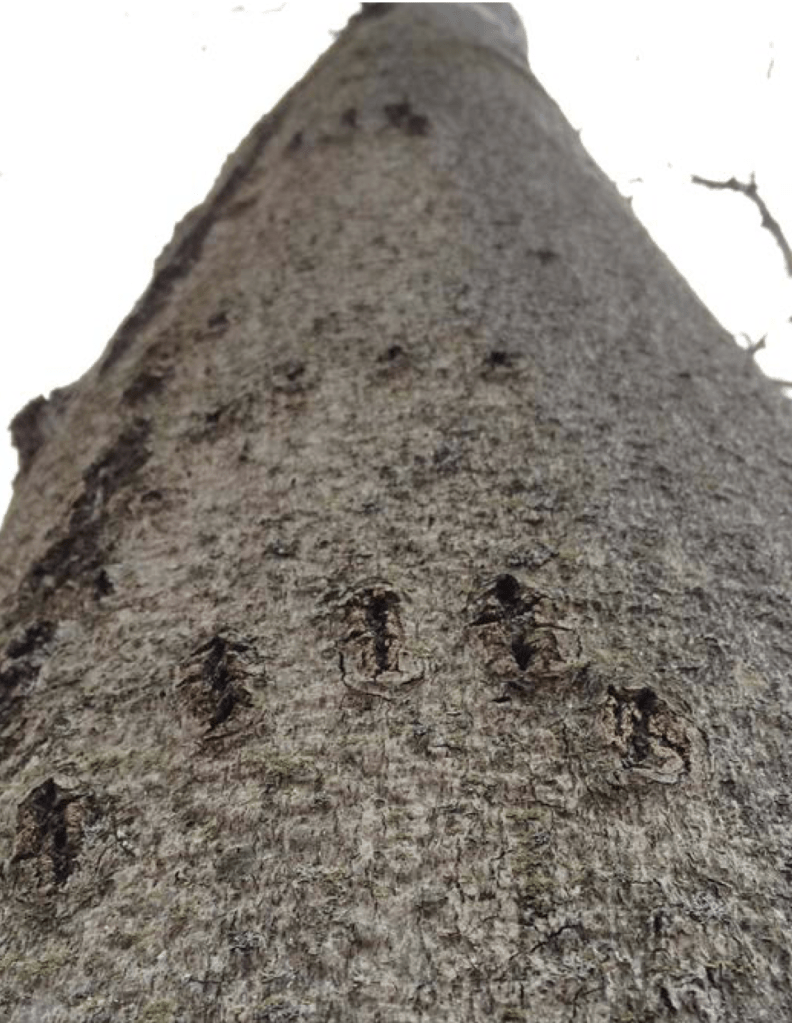
under a new budgeting model. Saturn was returning. I needed to get back into fighting shape.

I dreamed of migrating my naturalist teaching out of UVM (keeping ties only to the Field Naturalist Program) and into Vermont townships. So I started the Vermont Master Naturalist Program. I registered this “school” as a business because I am too old to listen to a board of directors, be routinely audited, write lots of grants, or even complete the necessary nonprofit paperwork. Every step of the process was a bear, from finding insurance to negotiating deals with partners. I quickly discovered that I don’t resonate well with business culture. In my new business–owner role, people either want to sell me things or teach me how to sell things. (Wear red! Be confident! Hand the person you’re talking to your phone so they can’t walk away from you!?!) None of this felt natural or worthwhile to me.

I wanted to find people who dream of being naturalists, create a path for them, help them meet other naturalists, and put them to work on saving nature in their towns. I wanted them to understand that being a naturalist is a practice. It is how you spend your time, not how much you know. People often don’t grow up to be naturalists even when it is their heart’s desire. Now for over 500 people and counting, the Vermont Master Naturalist Program is making that dream come true.

·

On a recent Saturday, I went tracking with Vermont Master Naturalists at a granite quarry where bobcat, coyote, porcupine, and fisher tracks mapped out their travels from the talus to the icy edge of the quarry pool. I am, at best, a middling tracker. But I delight in spending time with people who want to be out in the woods. When I see something magical, I want to turn to a kindred spirit and whisper, “Look”! I have a couple of decades before Saturn returns next time. In the meantime, I will be out in the woods. 
This post was originally published here, and here.

Burlington’s Beavers

By: Remy Crettol and Alicia Daniel

About Burlington’s Beavers 

August feels early to be laying in wood for the winter, but we have a wild companion in Burlington who is already building up a cache of winter wood–though the wood is to eat, not to burn. All summer long, beavers cut copious amount of hardwood trees and saplings. They use the limbs to shore up dams and lodges and they cache the inner bark and twigs for food under water near their lodge. Beavers are more elaborate in their winter preparations than any other wild Vermont animal. Unlike migrants, who fly south or resident birds and animals who hibernate or forage on sparse winter fare, a beaver over winters with her clan–cozy in the lodge she has built, living on a pond she helped create, and eating food she has stored.

In Vermont, if a tree falls in the forest, there’s a good chance that a beaver will hear it.  Not only are beavers abundant and widespread throughout the state, they are also a primary reason that trees do fall.  And not just any trees.  Beavers use their chisel teeth to selectively cut hardwoods that grow in close proximity to water. And in the process, they alter landscapes at a scale second only to humans.

Where are the Beavers?

To see evidence of this process at work you can visit Ethan Allen Homestead.

The Homestead is home to a pair of beavers that make their presence unmistakably known. Trees new and old bear scars from beaver chewing, clearly defined beaver paths bridge bodies of water, and the Homestead hosts multiple dams and two beaver lodges. The beavers are active dusk to dawn during the warmer months of the year preparing for the cold winter to come.

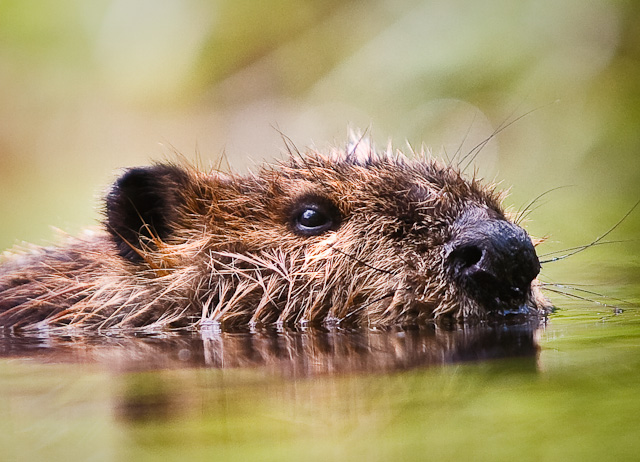
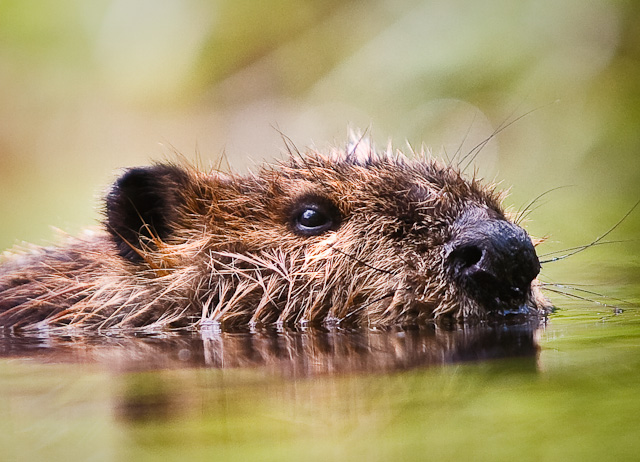
Beaver Swimming in a Pond
Photo Courtesy of: Steven David Johnson

More about Burlington’s Beavers

Beavers accomplish their amazing winter survival by creating the conditions that they need to survive. Beavers use water for cover, for transportation, and for refrigeration. They will emerge above the ice to feed (near an escape hole), to repair a dam, and to seek food in case of emergency, but they are not fast runners on land to begin with and are further hampered by snow.  Unfortunately, a beaver on foot in the winter is very vulnerable to predators like coyotes.

Beavers need a body of water deep enough that it will not freeze to the bottom.  Using sticks, mud, and even stones, beavers will build dams across flowing rivers and creeks and culverts to create a pond or series of ponds. After a beaver builds a dam and the pond freezes, they may adjust the water level, dropping it by a few inches to create a layer of air under the ice for breathing.

This past winter, the water level was so low after a prolonged drought that the resident beavers in the largest wetland at the Homestead were forced to relocate. They moved from the big wetland (which froze solid) to another lodge in a smaller wetland with deeper water.

According to Vermont naturalist Bernd Heinrich, beavers build “dams that may stretch a hundred or more yards long, and they impound acres of pond where water levels are raised five or more feet.”  An all- time record dam was constructed in New Hampshire. It was over three quarters of a mile long and the pond it held up had 40 lodges.  Lodges are an adaptation of dam building and are piles of sticks that are later hollowed out and used as homes.  People can even fit in abandoned beaver lodges.

Beavers accomplish their engineering feats in groups.  They mate for life and a clan may have an adult pair and several yearlings along with kits that are born during the winter in the lodge.  The young tag along after the parents, learning the skills they need to survive. There is some evidence that beavers learn their food preferences from their clan.

Beavers are territorial to others outside their clan. They create scent mounds to keep other beavers away and are known to defend their habitat. This past winter a young beaver was found dead at the Ethan Allen Homestead near the lodge of the resident pair. Its cause of death is unclear. Perhaps it was a kit that did not survive the winter or maybe it was an unwelcome beaver looking for habitat in hostile territory.

Beavers are rodents, a group of animals distinguished by their incisors which are covered with enamel in front, but not behind, so that as these animals chew, they wear away the back side, sharpening their teeth like chisels. Beavers turn their heads sideways to bite into standing trees and you can see their teeth marks meeting together on a stump.  Beavers close relatives include squirrels, mice, porcupines, and muskrats.

The ponds beavers create are habitat for many plants and animals.  The red eft, a small slow moving and bright orange amphibian commonly seen in Charlotte woods in the fall is the immature stage of the Red Spotted Newt.  And though the same species is distributed throughout the Southeastern U.S., the terrestrial stage only exists in the Northeast.  One hypothesis explaining this pattern is that the Red Spotted Newt is dependent on the beavers to create ponds for breeding habitat in its northern range and the “life span” of a beaver pond is generally only 15 to 20 years.  Northern Red Spotted Newts have an eft stage so that they can disperse from the pond to find other habitat, like a new beaver pond.

After a pond is abandoned and drains, a beaver meadow is what remains.  As silt accumulates behind a beaver dam, a flat plain is created.  When the beavers run out of food or die and the pond is abandoned and drains, this new soil regenerates into a wet meadow–great habitat for animals like moose.  Another common pattern that results from beaver activity in a forest is a signature ring of softwoods that persists even after the beavers have moved on.  By cutting only hardwoods, beavers create a circle of uncut spruce, pine, fir and hemlocks that surround the higher elevation ponds, while lower elevation ponds have white pine and hemlocks around them.  If you look closely you may see the beaver chewed stumps of aspen, birch and maples under this canopy of softwoods.

When explores and colonists arrived in North America, beaver populations were estimated to be between sixty and two hundred million.  So, it may come as a surprise that you would have been hard pressed to find even one beaver at the turn of the last century anywhere in Vermont.  Hunted to near extinction for their pelts (which were popular in Europe for hats), beavers were only reintroduced into Vermont in 1921.

If you decide to go looking for beavers here are some signs. You have a good chance of seeing one this time of year, especially at dusk.  The characteristic sharpened like a pencil look gives beaver sticks an unmistakable appearance.

This post was originally published here.