
By Lorna Dielentheis
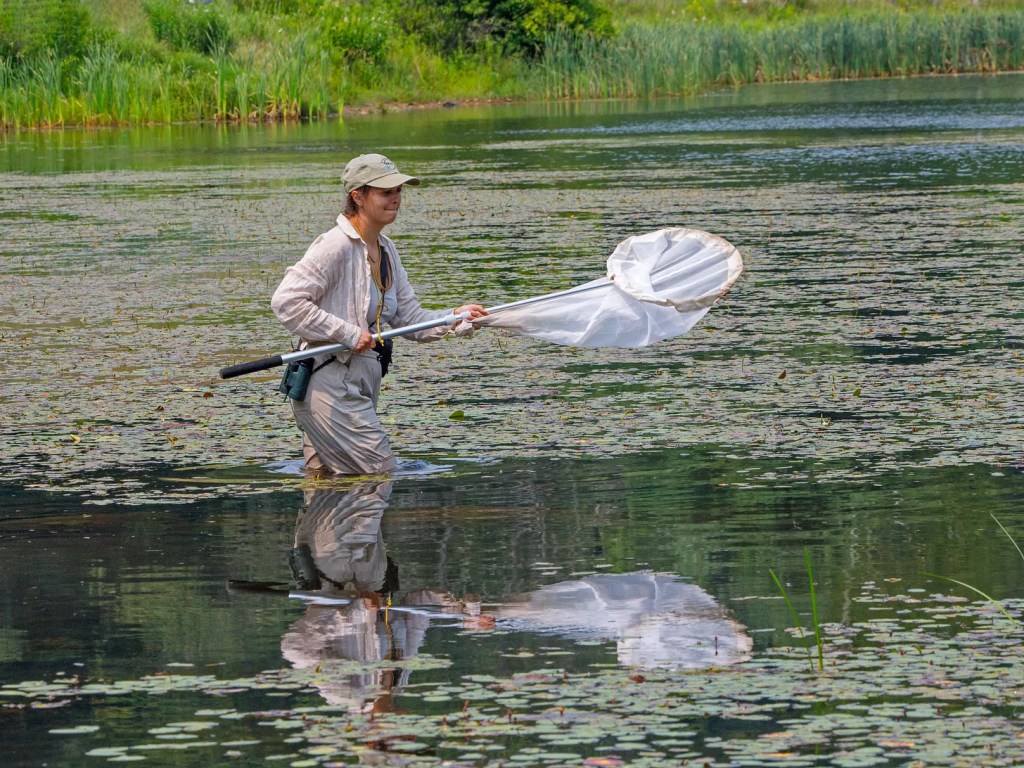
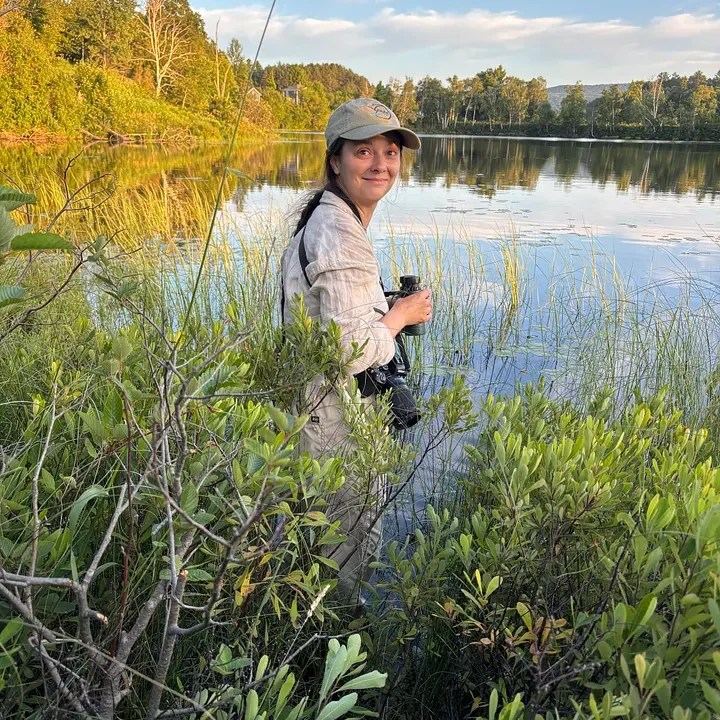
Me, wading. Thanks to Bryan Pfeiffer for this photo.
July was a whirlwind.
I added 23 odonate species to my life list, pulled at least 20 roving ticks from my sweat-soaked body, led a half-dozen programs at Rock Point Center, bushwhacked into no less than 3 bogs, turned 34 and barely noticed.
Numbers don’t capture the depth of it, though. This month has been unlike any other in ways that are unquantifiable: I watched the most badass dragonfly devour a tiger swallowtail, and later that same day held it in my hand. I walked on a floating mat of peat and felt it reverberate beneath me with each step. I cried at the edge of a pond, at the end of a long field day, overwhelmed by the beauty of vesper bluets mating at dusk. I have felt so alive and so myself.
Each of these experiences deserves their own post, and perhaps they’ll get them. For now though, I give you a few highlights from the best month in recent memory.
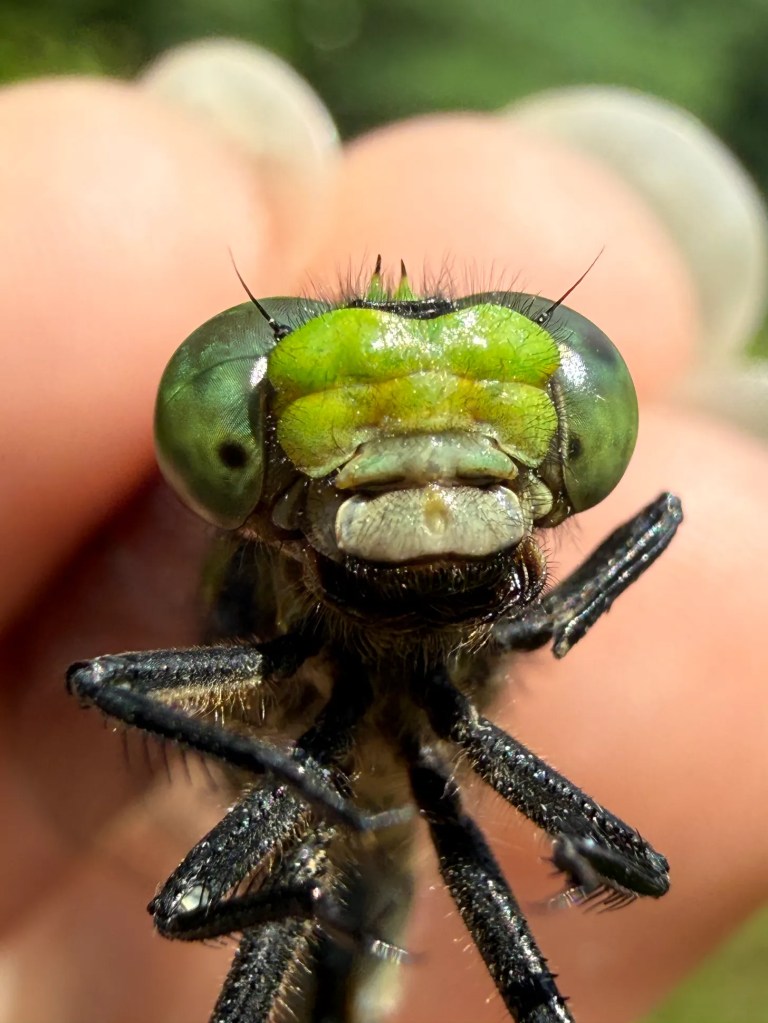
Ophiogomphus mainensis, female
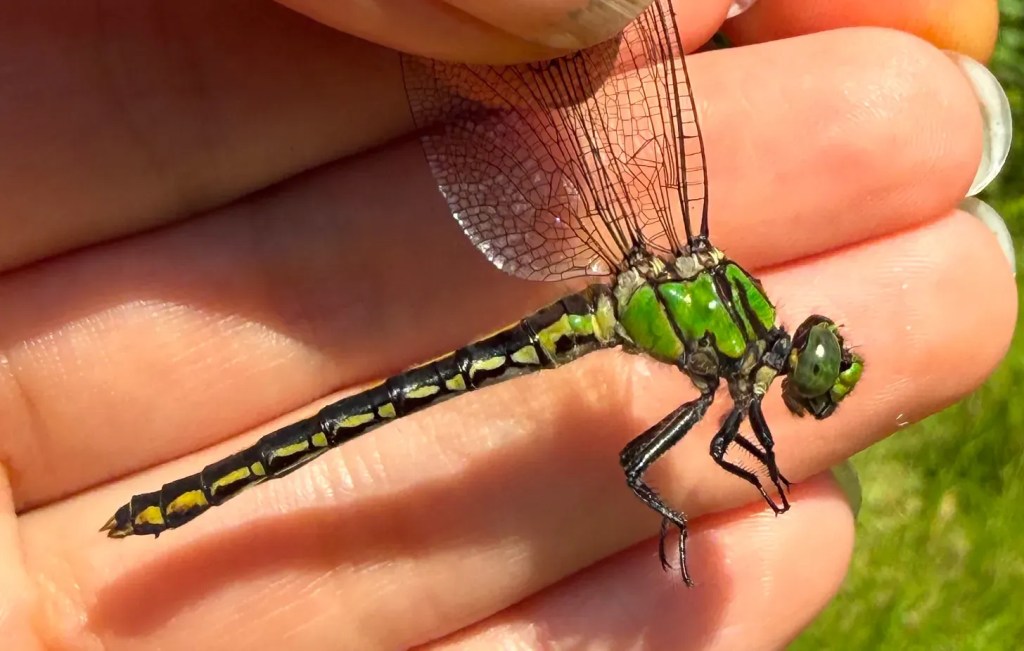
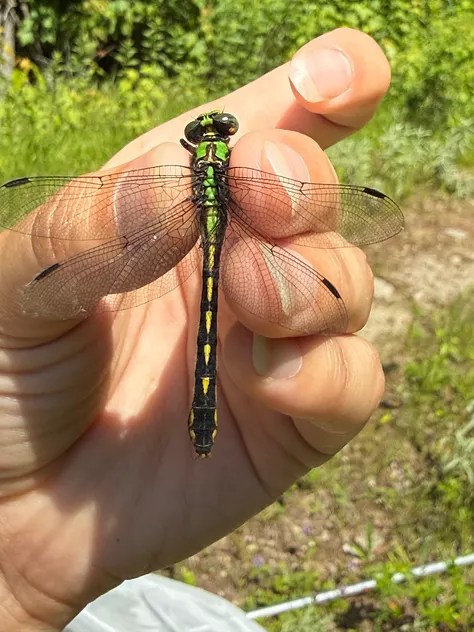
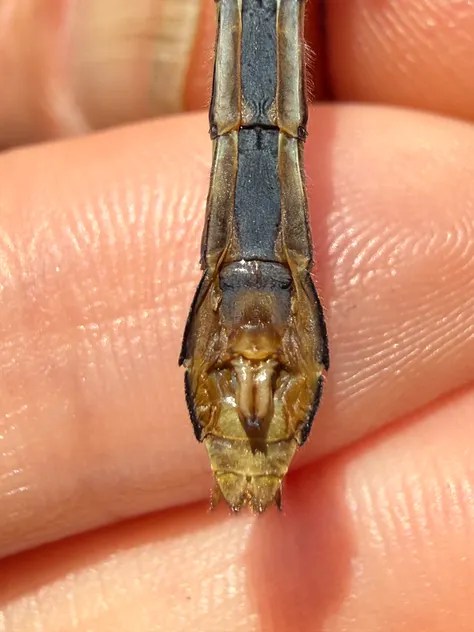

July 3rd: My first Ophiogomphus— Ophiogomphus mainensis. A total stunner, with an acid green face and thorax, sporty yellow markings down her clubbed abdomen, and two tiny, devilish occipital horns. Even her subgenital plate had cool-girl vibes.
Ophios have about a month long flight period in Vermont, peaking in June. I caught Ophiogomphus carolus the following week, and no more after that.
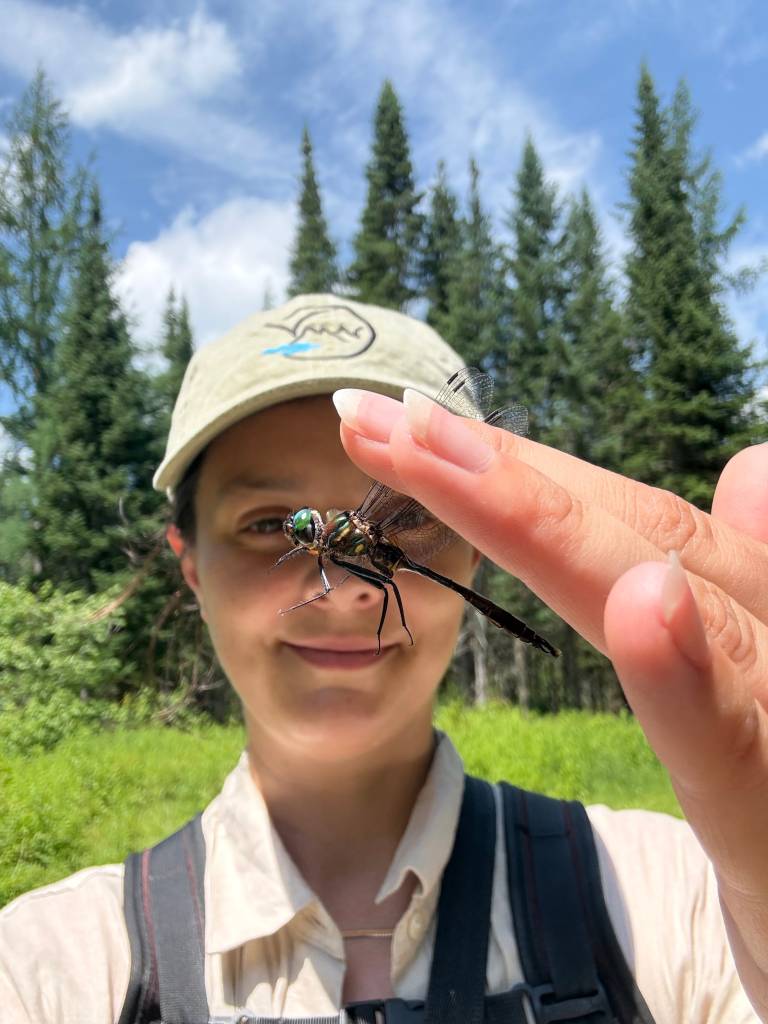
Somatochlora walshii, or Brush-tipped Emerald (male)
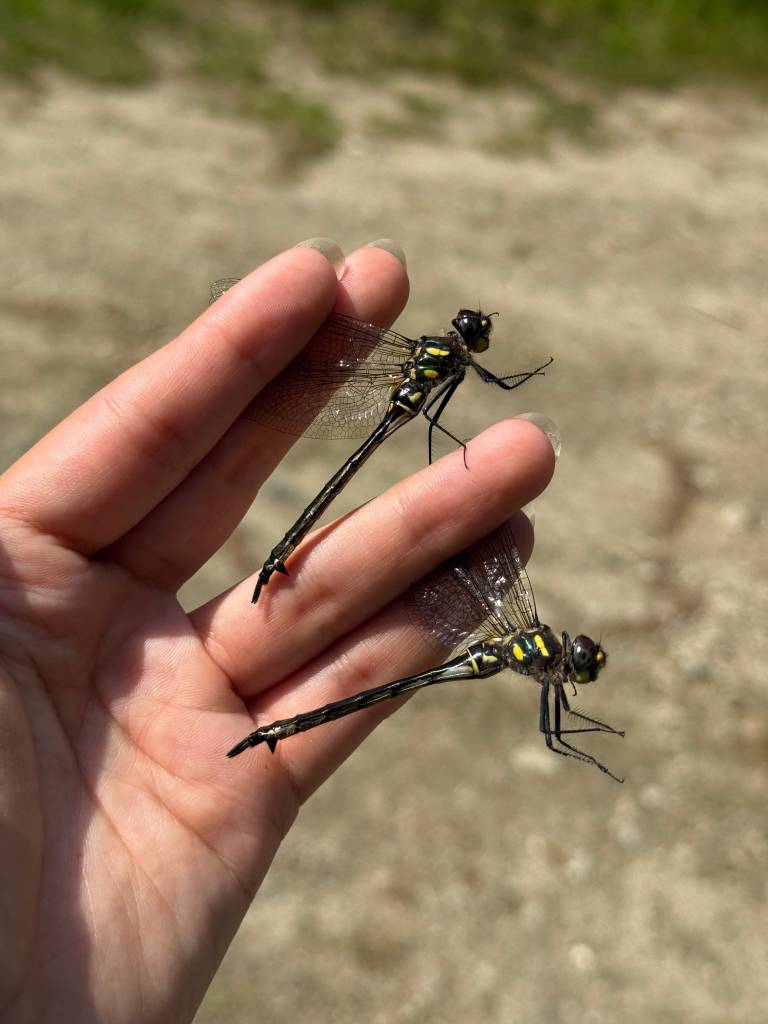
Two female Somatochlora elongata, or Ski-tipped Emeralds
July 3-27: Somatochlora. There’s this moment after you swing at a dragonfly, a brief pause, when you wait for the sound that means you got it— the papery whir of wings beating inside the net. It’s a mere half-second but in that space the anticipation stretches time. Like watching a kicked ball glide uncertainly towards a goal.
I’ve never been good at sports but I am, to my surprise, excelling at netting dragonflies. Of all the dragonflies I’ve chased, Somatochlora have proved the most difficult. So each Somatochlora I’ve caught this month has felt like scoring a game-winning point, even more so when there are others there to share in the victory. It’s addictive. I caught four Somatochlora species this July: walshii, franklini, forcipata, and elongata.

Male Hagenius brevistylus, or Dragonhunter
July 8: Dragonhunter aka Hagenius brevistylus is getting its own post, but I would be remiss not to mention it here because it’s the craziest dragonfly I’ve caught to date and definitely the highlight of July. My first encounter with it was epic— I watched it devour a butterfly. More on that soon.


Arigomphus villosipes, or Unicorn Clubtail
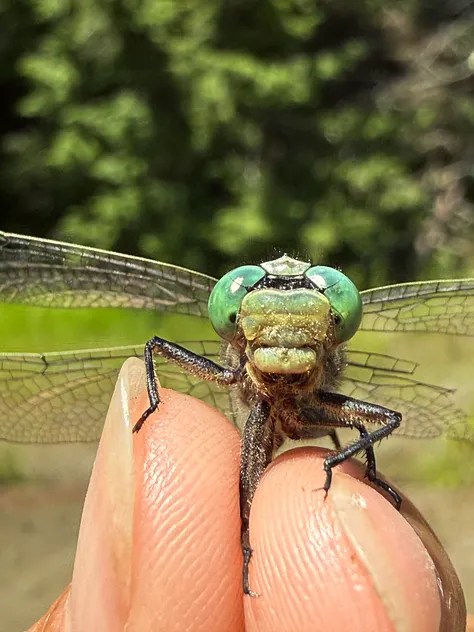
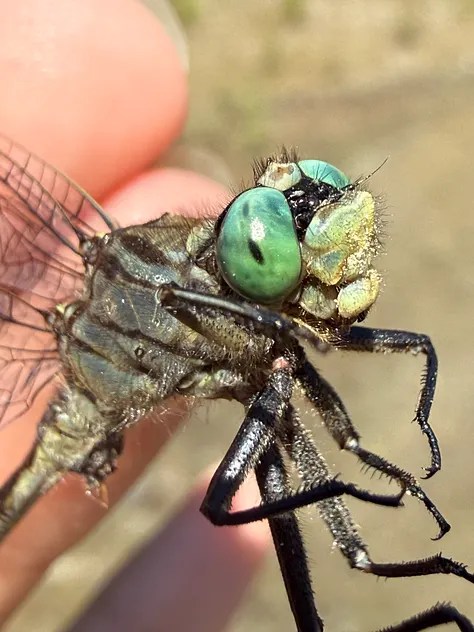
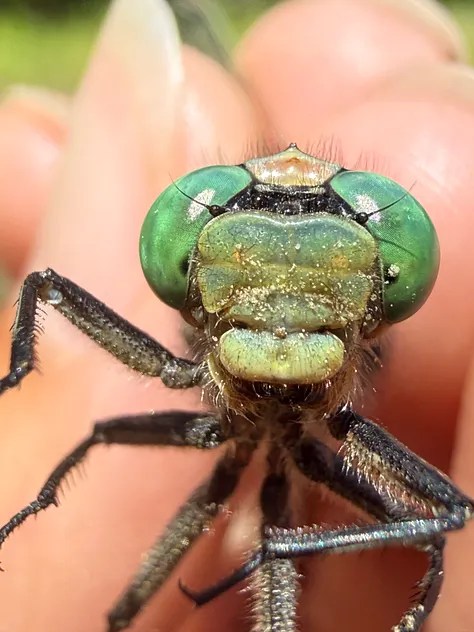
Male Arigomphus villosipes, or Unicorn Clubtail (note the occipital projection)
July 12: Arigomphus villosipes, or Unicorn Clubtail, named for the single occipital projection between the eyes. I spent a gorgeous afternoon at a beaver pond, watching the males guard their individual patches of muddy shoreline. I netted a couple but mostly just enjoyed their company, the sun sparkling on the water, and the little tadpoles that squiggled away each time I drew near.
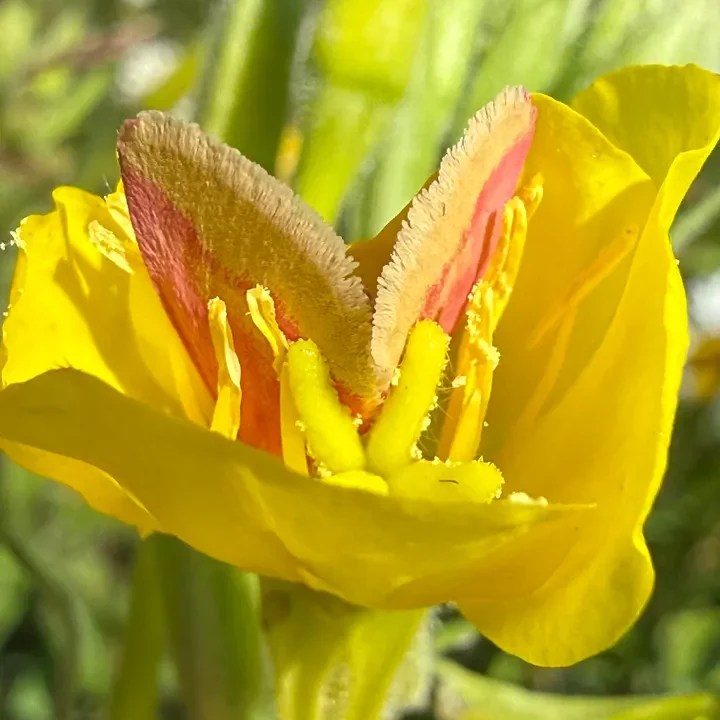
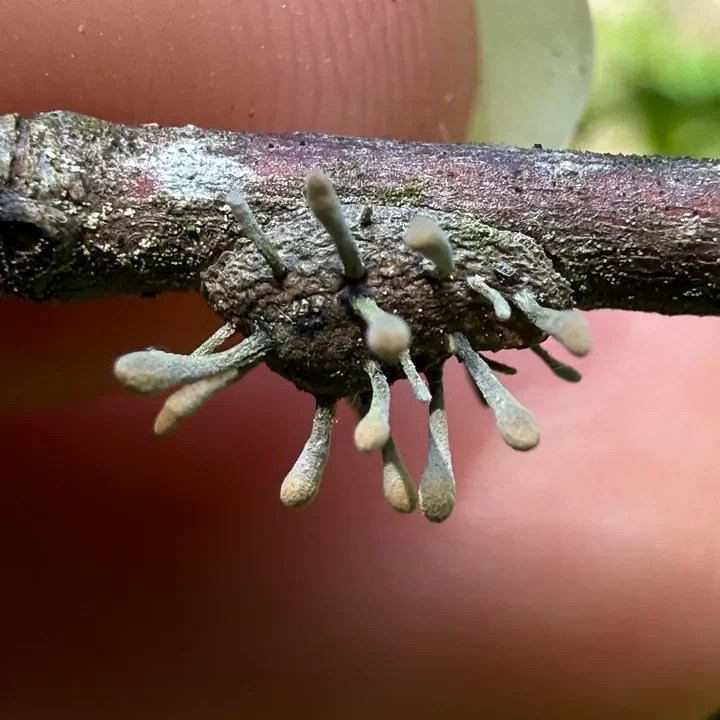
Left: a Primrose Moth tucked into a Primrose flower. Right: Bug Sputnik.
July 23: Two non-ode observations. First, just about the sweetest thing you can imagine: a little moth tucked into a flower. Primrose Moth, or Schinia florida. If you find this as enchanting as I do, I recommend Bryan Pfeiffer’s essay about them.
And a quick side note— I owe a lot of my odonate observations this month to a couple of experts/mentors: Bryan and Josh. They have graciously shared knowledge with me, joined me in the field, encouraged and facilitated my obsession. I’m very grateful.
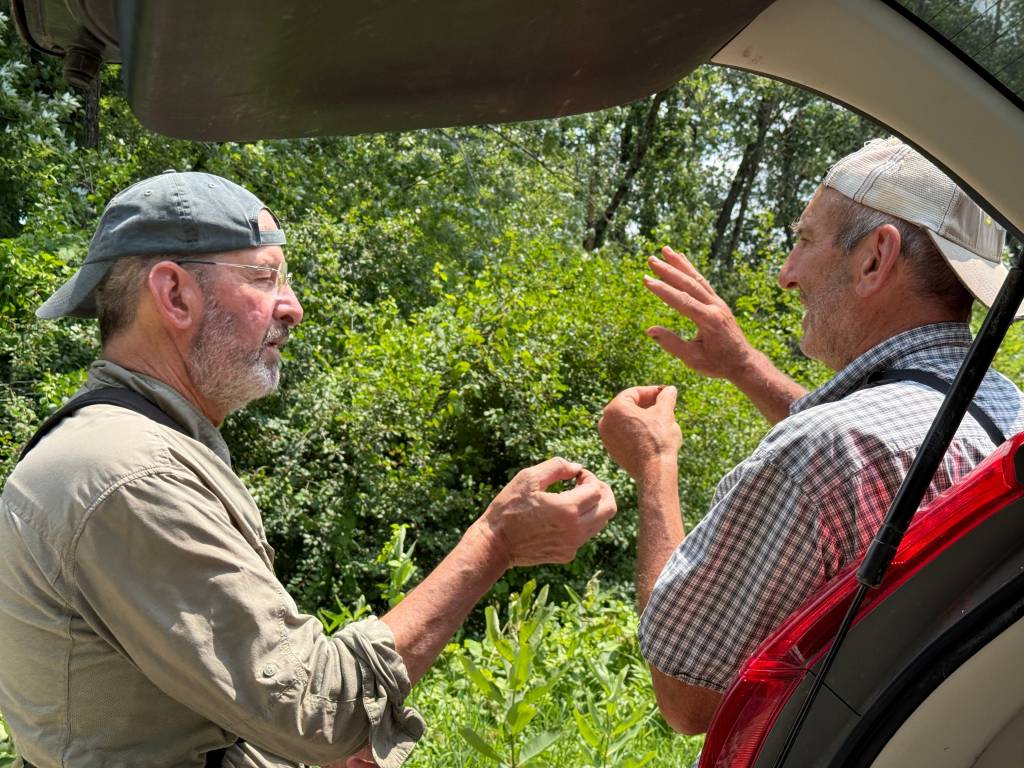
Bryan & Josh debating about Sympetrum genitalia
Next, a discovery on the opposite end of the cute-to-horrifying spectrum: Bug Sputnik. Josh and I were exploring a sandy clearing when I found one of my favorite trees, a hawthorn. While admiring its thorns, I noticed a bump with strange protrusions. I wondered aloud whether it could be a Cordyceps fungus that had infected a bug inside the little cocoon, or gall, or whatever it was. We took a bunch of photos and I snapped off a twig to take home.

Ophiocordyceps clavulata, or Bug Sputnik
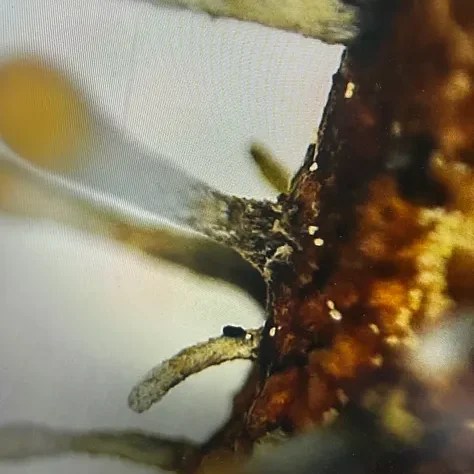
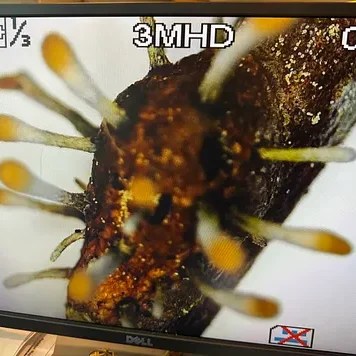
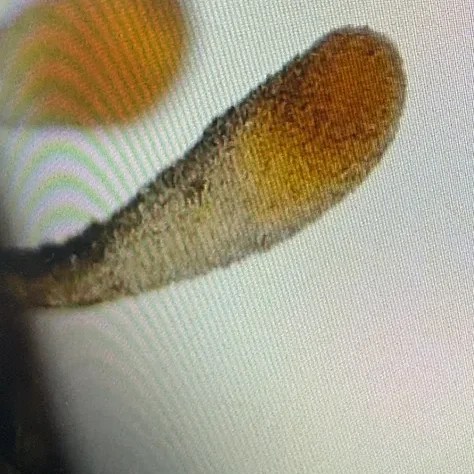
Bug Sputnik under the digital scope
Turns out, it is a fungus closely related to Cordyceps, in the genus Ophiocordyceps— the same genus as the one that is parasitic to ants. But this species infects scale insects living on trees. Ophiocordyceps clavulata, commonly known as Bug Sputnik. There isn’t much information online about it, and there are relatively few observations recorded on iNaturalist (just one other in Vermont). I brought it to work to show my colleagues and we looked at it under the digital microscope. You can see where the fruiting bodies of the fungus have burst through scale insect’s exoskeleton. Wild.
July 23: Finally, Vesper Bluets, or Enallagma vesperum.
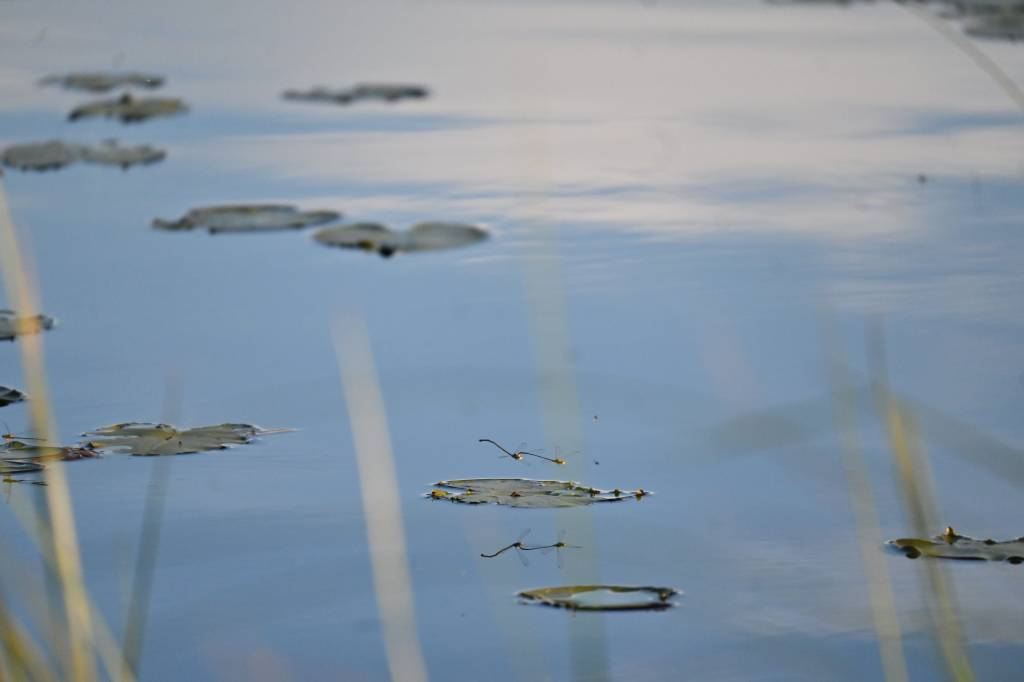
A tandem pair of Vesper Bluets, or Enallagma vesperum
A short reflection I wrote after seeing vesper bluets for the first time a couple weeks ago:
At a pond edge on the side of the road, with the noise of cars rushing past and, eventually, the constant groan of an approaching train, the vesper bluets skim gracefully from lilypad to lilypad. The glassy water doubles their elegant flight.
I am tired, and also spellbound. The golden hour light illuminates their yellow bodies, striking them in a way that makes them appear to glow from within. They glide to and fro, tiny dancers in a spontaneous yet synchronized ballet. I could watch them forever. A tandem pair flies away from the group, eventually alighting on a lilypad to rest, maybe, or in preparation to lay eggs. I’m not sure if they’ve mated yet, and maybe they won’t. I wonder what qualities the female looks for before curling her abdomen around, how many males she rejects for each she allows to mate.
The pair takes off again and I shift my weight, feeling the rings of cool water where my legs submerge. I lift one leaden foot and feel the blood rush back into it. The train is really close now, the noise distracting, and I’m happy the bluets can’t hear it, at least not the way we do. The light has faded but I can still see their silhouettes as they fly and settle, their delicate wings shimmering in the amber dusk.
I realize my eyes have welled up a bit. Another minute and it will be time to go.
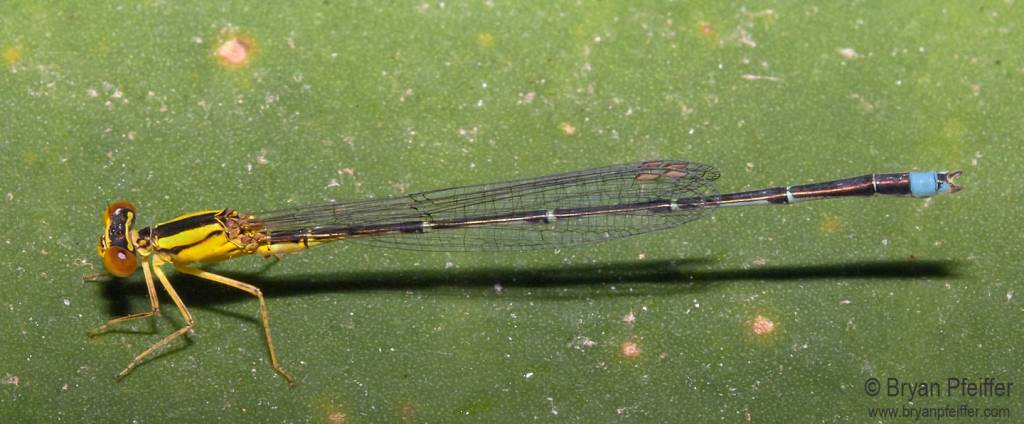
Male Vesper Bluet. Photo by Bryan Pfeiffer.
Left: me, watching the Vesper Bluets (thanks to Josh Lincoln for this photo). Right: a Vesper Bluet

Thanks for reading. All photos and illustrations are my own unless otherwise noted.
This post was originally published here.

