
By Lorna Dielentheis
Have you ever heard the shrill cries of spring peepers on a warm April night? Or the bizarre quacks of wood frogs, resounding deep in the forest?
I remember the first time I heard them. I was walking a trail at Missisquoi Wildlife Refuge several years ago and thought I heard ducks in the distance. I followed the sound, but every time I got close, the quacking dissipated and began again further away. Not one to shrug off a mystery, I followed the sounds for nearly an hour, at one point convinced there must be a secret duck oasis hidden among the brambles. I wasn’t far off– except the “ducks” were actually wood frogs, the “oasis” a massive vernal pool.
Vernal pools are seasonal accumulations of water caused by spring rain and snowmelt. They provide essential habitat to breeding amphibians, many of which return to the same pool year after year to mate and lay eggs. Spotted salamanders, jefferson salamanders, blue-spotted salamanders, wood frogs and spring peepers are just some of the pool-dwellers you might see. Look closer, and you’ll find tinier inhabitants: fairy shrimp, diving beetles, water striders, and many other invertebrates. It’s easy to understand why these temporary wetlands are considered natural communities; they are miniature worlds unto themselves.
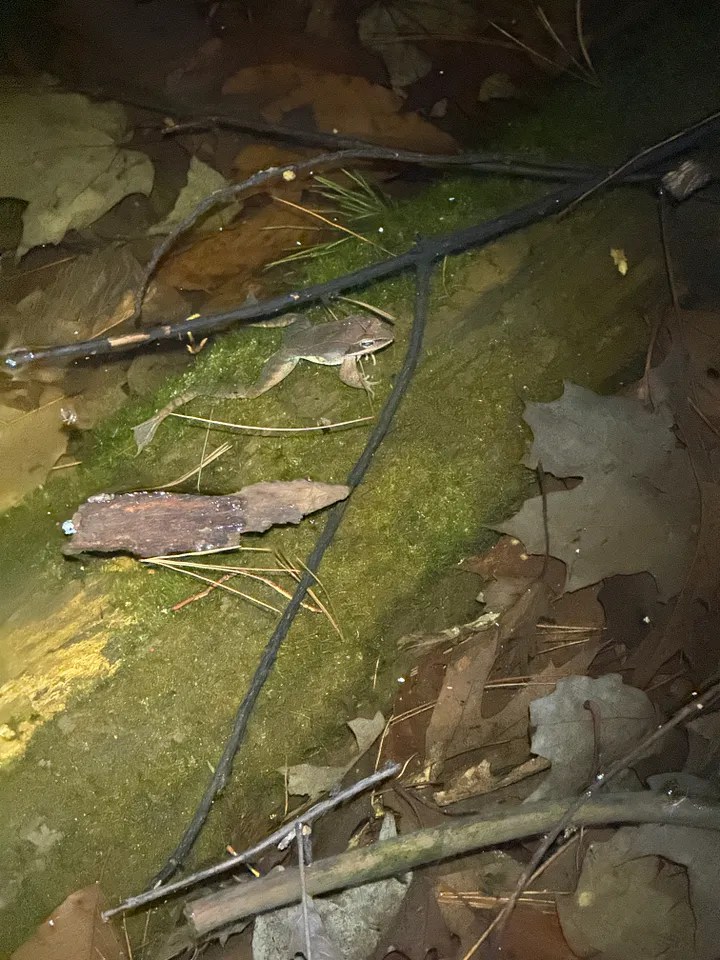
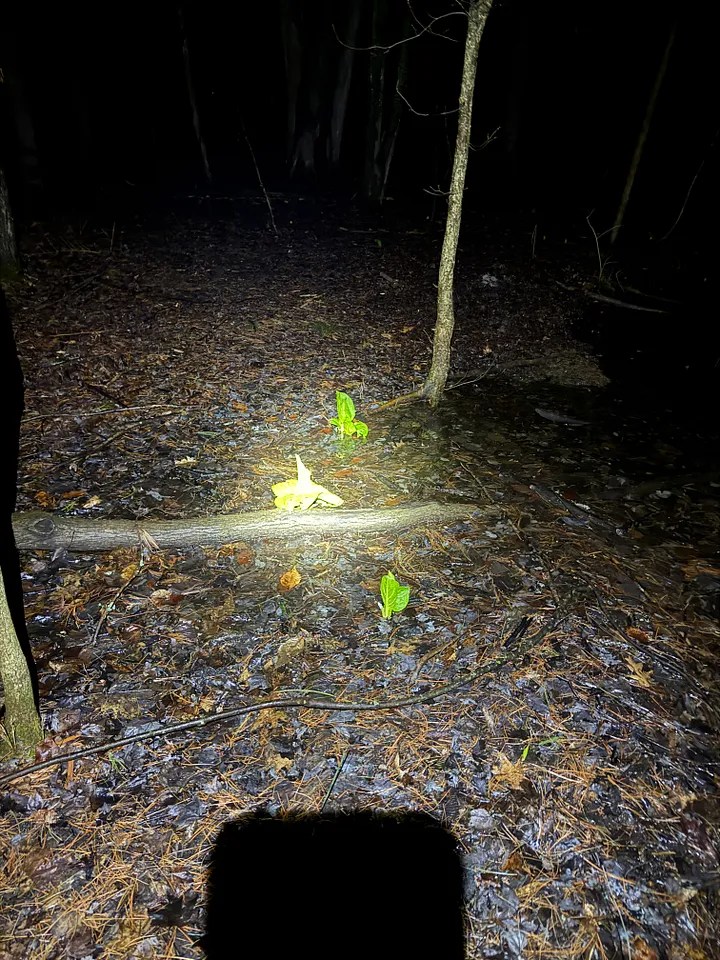
a wood frog hovering in the vernal pool, skunk cabbage
Last night I visited one of these pools. Accompanied by my friend Alicia and a couple other amphibian enthusiasts, we arrived just past sunset and made our way into the woods. It had rained all day, and I hoped the wet, warm environment would mean lots of activity surrounding the pool.
The woods were silent, a bad sign for us frog-seekers. We proceeded to the pool’s edge nonetheless, illuminating the placid water with our flashlights. Skunk cabbage and dead branches interrupted the glassy surface but nothing moved; the damp, mute air hung around us like a fog. We maneuvered around tangled shrubs and fallen logs, each of us stopping occasionally to peer into the shallow basin. Alicia spotted a single clutch of frog eggs, and on closer inspection informed us they were nearly fully formed tadpoles. It was beginning to look like we’d missed our ticket to the amphibian nightclub.
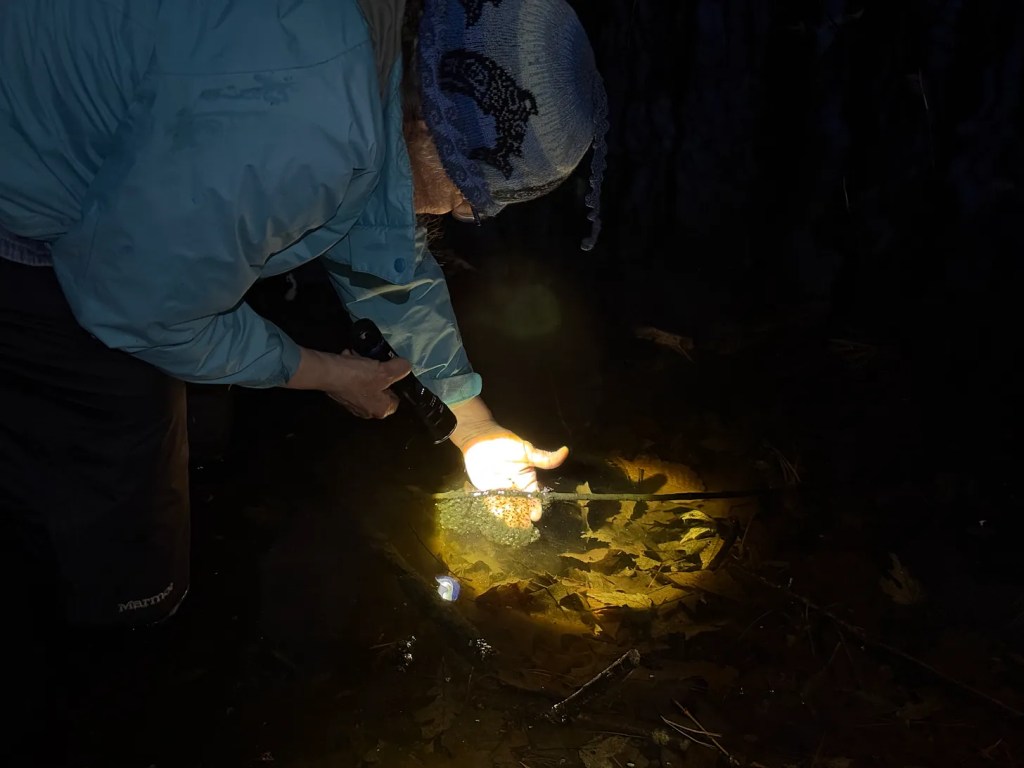
Alicia inspecting the eggs
I ventured out on a wobbly tree trunk, hoping the deeper part of the pool would reveal its secrets to me. I noticed frog eggs smeared along the log, signs a predator of some kind (probably a bird) had enjoyed an easy, protein-rich meal. Nearby, another tasty treat: a munched-on frog leg floating just beneath the surface.
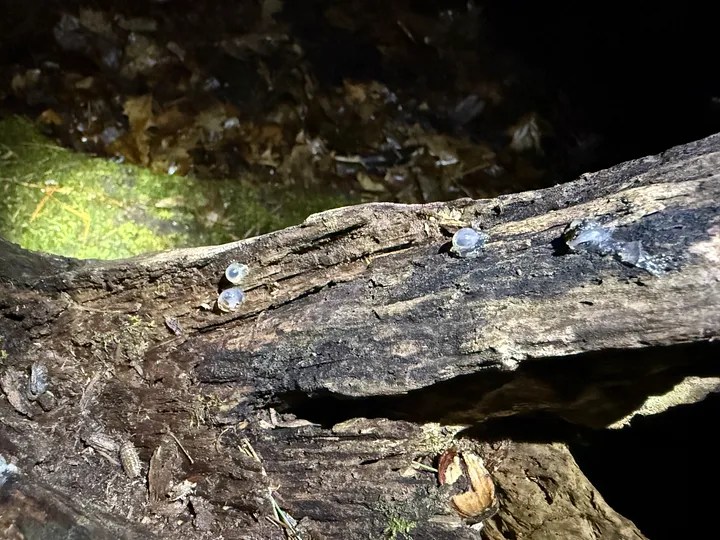
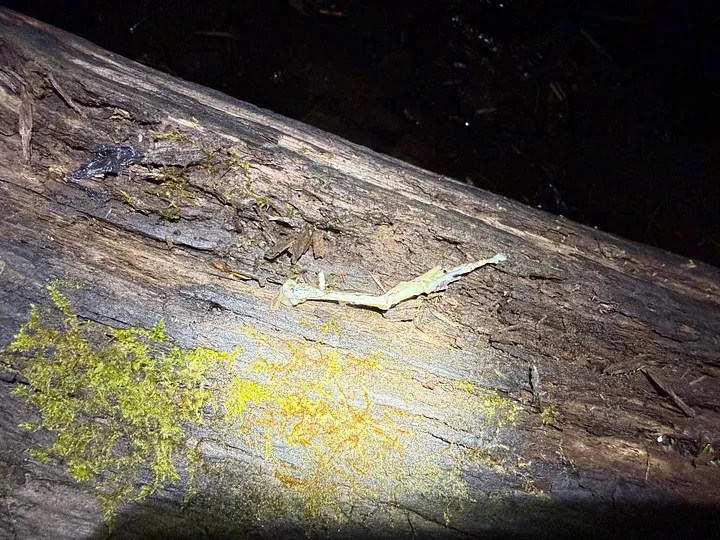
caviar et cuisses de grenouille, or, frog eggs & a frog leg
I continued along the edge of the pool, leaving the others to marvel over a graceful diving beetle they’d spotted. I saw a couple wood frogs, a fairy shrimp, the fuzzy white fiddleheads of a cinnamon fern poking out of the leaf litter. And eventually– the motherlode. Just a foot from the pool’s edge, I spotted a fresh cluster of frog eggs, and as I glanced around, I saw that every branch within ten feet had multiple egg bundles clinging to it. I scooped up the nearest clutch, the jelly-like egg sacs trembling in my palm. Small orbs containing the possibility of life. They clung firmly together, the embryos reflecting the light of my headlamp. I wondered how many would survive, and how many would instead provide nourishment to some other creature. I wanted to kiss them. Instead, I silently wished them well before returning them to the black water.
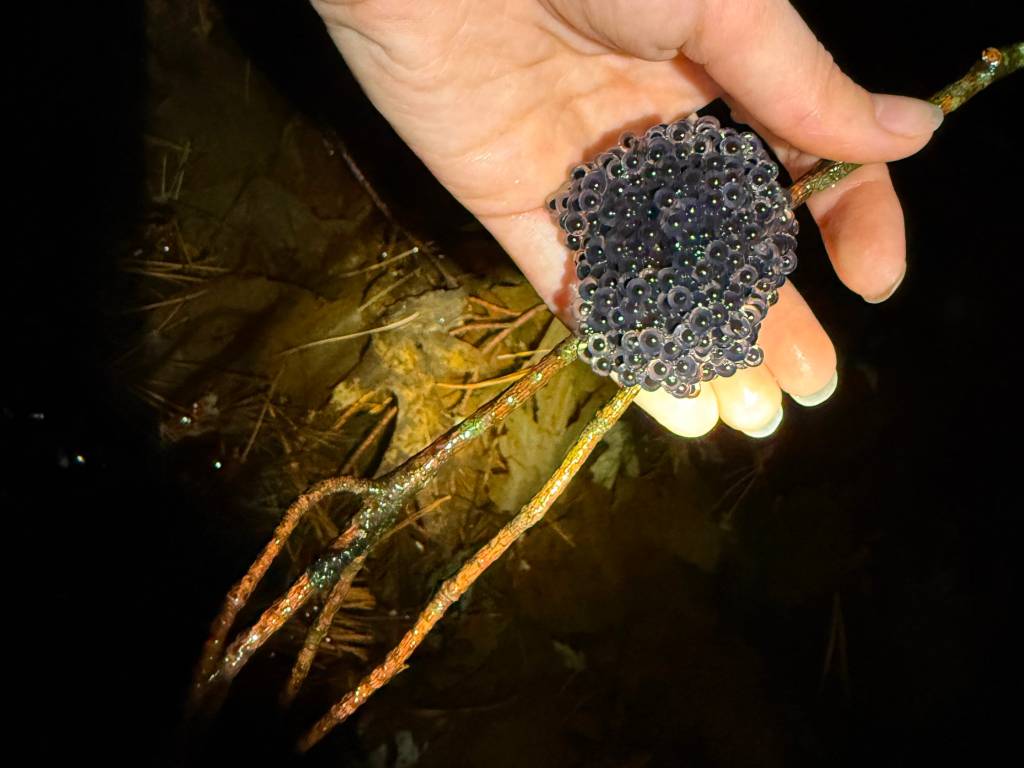
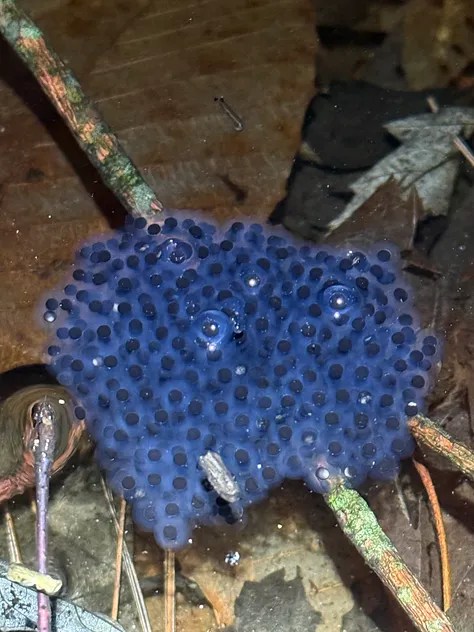
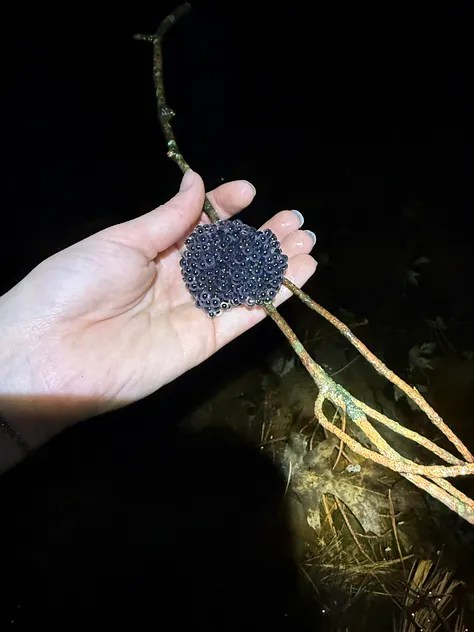
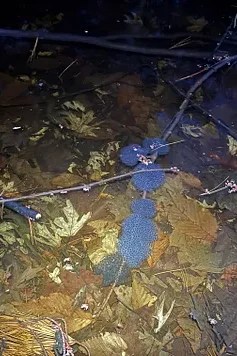
the motherlode
Alicia, Heather and I picked our way along the muddy bank. We spotted a wood frog resting among the leaves and sat down next to it, commenting on the frog’s white lips and adorable little face.
Then, an interruption— a single wood frog quacked, as if to join our conversation. We went silent. Slowly, more frogs began to join the first brave soloist: a handful, a dozen, then the whole pool coming alive around us.
We turned our lights off and sat enraptured as the chorus echoed through the dark, still woods.
The chattering steadily intensified, individual quacks growing closer and closer to us. Minutes passed. I thought about this sound, these frogs, what being here at this moment meant to me.
Ever since that first mysterious encounter at Missisquoi, I think of frog songs as a harbinger of spring. Each year I anticipate the first rainy, warm night when I can go help amphibians cross the road– an act of service, sure, but also an opportunity to touch the wet alien bodies of spotted salamanders. The deafening cries of spring peepers signal to me that ephemerals will soon emerge from the leaf litter, and Osprey will return to their nests.
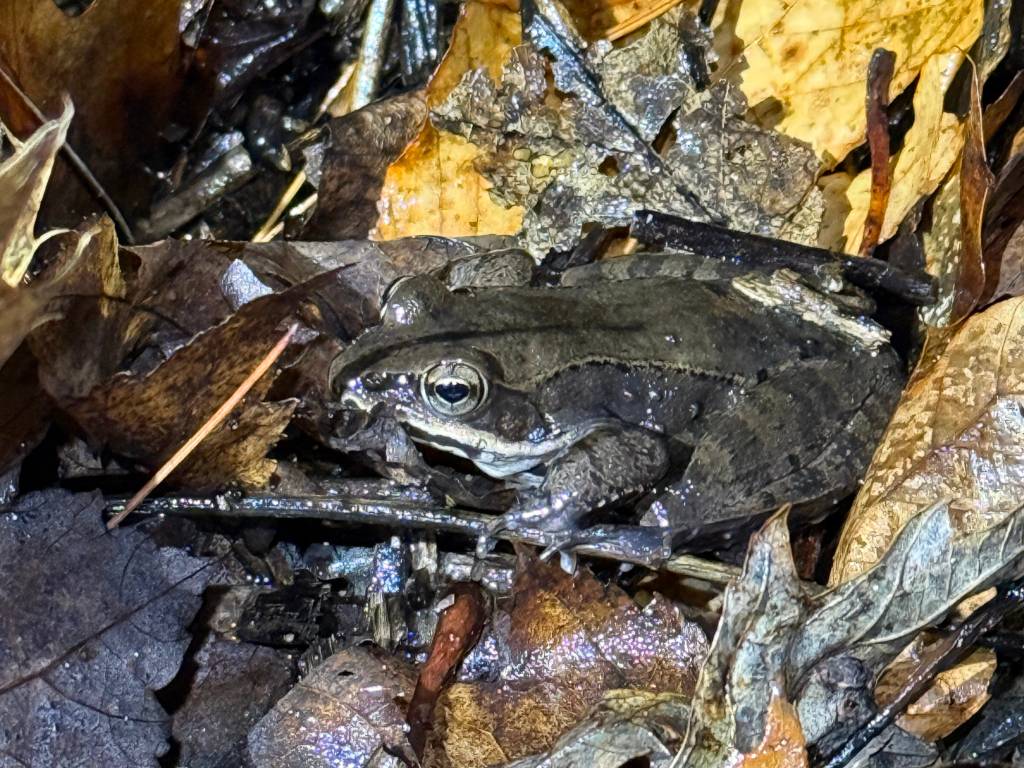
a wood frog— note the white lips and adorable face
Witnessing these phenological events connects me to my animal body. Last night, as the watery chattering of the frogs washed over me, I realized these seasonal markers have become my self-recognized holidays, my own freshly hewn traditions. This year I will kayak beneath nesting herons and drive to see showy lady’s slippers. I will watch my porch fill with boxelder bugs and hear a pair of loons calling at sunset. The snow geese will return to dead creek. I’ll make my yearly pilgrimage to a trail that briefly fills with mushrooms and I’ll smell the bewitching scent of freshly fallen leaves beginning to decay. The first snowfall, the return of short-eared owls, bald eagles hunting on the ice. All the meaningful landmarks that make up a year.
A little splash sounded a few feet away from us and the frog song began to dissipate. My eyes had adjusted to the dark and I turned around to grin at the two women sharing this moment with me. I wondered if they were feeling the same indescribable emotion I was. Only a few frogs sung now, their final notes reverberating through the night air. Then as quickly as it had begun, the chorus ceased.
“How can anyone think of doing anything else this time of year?” Alicia whispered.
I have no idea.
This post was originally published here.
 Vermont Master Naturalist Program