
The “layer cake”
One way to understand any landscape is to imagine slicing through it like the layers of a cake and then considering all the interactions between the layers.
The Vermont Master Naturalist Program is designed upon this approach–a bedrock to birds exploration of each town. Special locations are chosen because they have stories to tell. Laid down on its side, the layer cake becomes a timeline of Vermont natural history.

Artwork by Lorna Dielentheis
Based on work by Scottish landscape architect Ian McHarg (UPenn), the layer cake approach first arrived in Vermont in the 1980s after UVM Field Naturalists studied it under Tom Siccama and Art Johnson at the Yale School of Forestry Camp.
Understanding the approach

Want to tag along for a VMN hike? Visit our Youtube Channel!
Protecting Biodiversity
If you only watch one video on the importance of protecting biodiversity (i.e. life on earth as we know it) it should be this one by Doug Tallamy.
Vermont Master Naturalist is a founding organization of Grow Wild.
Grow Wild is a network that promotes biodiversity and climate resilience by creating more native plant and pollinator habitat across public and private land in Burlington, Vermont and the Champlain Valley.
If you want to plant native plants in your yard and garden please visit the Grow Wild website.
Wildlife and Other Biodiversity
- Champlain Valley Wildlife Habitat, Connectivity & Biodiversity Workshop Series – compiled by 2021 Addison County cohort.
- Wildlife crossing a fallen log for a year – amazing and beautiful
- A Shared Life: People and Biodiversity in Vermont – a collection of stories about people in Vermont and their connections with our landscape.
- Vermonter’s Guide for Protecting Biodiversity – designed to give Vermonters clear instructions for directly restoring, enhancing, and protecting biodiversity in the areas that we have the most influence over.
- Bryan Pfeiffer’s incredible blog The Viral Spring – a field guide to nature in the pandemic
Cultural Geography
- Evolution of Richmond Culture – how geology has shaped Richmond’s cultural and business landscape
- The Evolving Cultural and Natural Landscape of Huntington
- Burlington Geographic talks – featuring everything from bedrock to birds, to human health
- Stonewalls & Cellar Holes with Sam Ford – “read” old forested farmscapes and agricultural architecture to trace 300 years of land use history
Things to do with kids
- The Backyard Naturalist– great lesson suggestions from Crows Path
- Ideas for Families: Exploring Nearby Nature Together – Four Winds Nature Institute
RECOMMENDED Books
Reading the Forested Landscape: A Natural History of New England by Tom Wessels
This book teaches us to read the landscape the way we might solve a mystery.
Wetland, Woodland, Wildland by Elizabeth H. Thompson, Eric R. Sorenson and Robert J. Zaino
A must-have book for Vermont’s natural communities comprising forests, wetlands, mountaintops, and shores.
The Nature of Vermont by Charles Johnson
An introduction and guide to the state’s natural history in the context of geologic and human pasts.

Our Better Nature: Hopeful Excursions in Saving Biodiversity by Curt Lindberg
Stories, essays, and resources to guide and inspire action in favor of nature everywhere. Of all the challenges facing the planet, the loss of biodiversity and the current extinction crisis are among the gravest. One chapter in the book features Vermont Master Naturalist.
The Northern Forest Atlas by Jerry Jenkins
The Northern Forest Atlas produces graphic tools for naturalists and ecologists
Ecological Mapping
Natural Resources Atlas – Vermont Agency of Natural Resources
BioFinder – Vermont Agency of Natural Resources
Vermont Conservation Design – Vermont Agency of Natural Resources
Geology
The Geology of Vermont, B. Doolan, 1996
Bedrock Geology Map of Vermont
Paleontology of the Champlain Valley, Welby, 1962 (pdf)
Champlain Thrust at Lone Rock Point, Burlington
Interactive globe of ancient Earth – A global map showing changes over geologic time by location
Vermont State Rocks – common and unusual rocks of Vermont with descriptions and locations
Six metamorphic rocks – An introduction to Geology. See also, Metamorphic Rocks (and toast)
Classification of metamorphic rock – Physical Geology by Steve Earle (Open Textbook B.C.)
Barrovian Metamorphism and Metamorphic Grade – describes series of metamorphic rocks and what happens when the same parent material is metamorphosed to different degrees
540 million years of movement in six and a half minutes – begins long after the formation of the massive Grenville Mountains (basement rocks of the Adirondacks) 1.3 Billion years ago. As the video opens, those mountains have eroded away, the supercontinent Rodinia has rifted, and the Iapetus Ocean has opened up through continental drift. The stage is set for an island arc to make its way towards Vermont and uplift the Green Mountains. See also a more recent production.
Glacial Geology
An overview of glacial processes in the Champlain valley:
Burlington and Colchester Glacial Geology (pdf)
A visualization of the formation of kame terraces and deltas during retreat of the Laurentide glacier from part of central Vermont by created by Chris Fastie, 2010
Winter Tracking
For help visualizing animal gaits, check out this awesome video by tracker Steve Leckman.
For more tracking resources, these two books are outstanding:
Tracking and the Art of Seeing: Paul Rezendes
Mammal Tracks & Sign: Mark Elbroch
Another good guide is:
Mammal Tracks : Life-Size Tracking Guide: Lynn Levine
Here is a great link about how to tell candids apart in trail camera photos:
Hydrology
Watch a drop of water travel to the closest ocean from anywhere in the world:
Winter Trees
Forest Trees of Maine
Physics of Snow
Snowpack depth and density are critical to rodent overwinter survival.
Here is a brief overview of snow crystal metamorphosis and evolution
Archaeology
For information on Vermont’s archaeological past, the UVM Consulting Archaeology Program, UMass Archaeological Services, and VELCO published a 40+ page booklet in 2011 that covers the research and excavations done on a new power line location through three Champlain Valley counties. They give a brief overview of the three main Native American periods Peter Thomas mentioned (Paleoindian, Archaic, and Woodland), descriptions of the field work and information collected on the power line route, and descriptions and photos of the artifacts they found, including how they were made and used. This booklet was given to all the schools and libraries in the region the power line passed through, and was aimed at the general public and is very readable and available to download here: https://core.tdar.org/document/391860/powerful-history-the-archaeology-of-native-people-in-the-champlain-lowlands
Signs of Spring
Newcomb’s Wildflower Guide
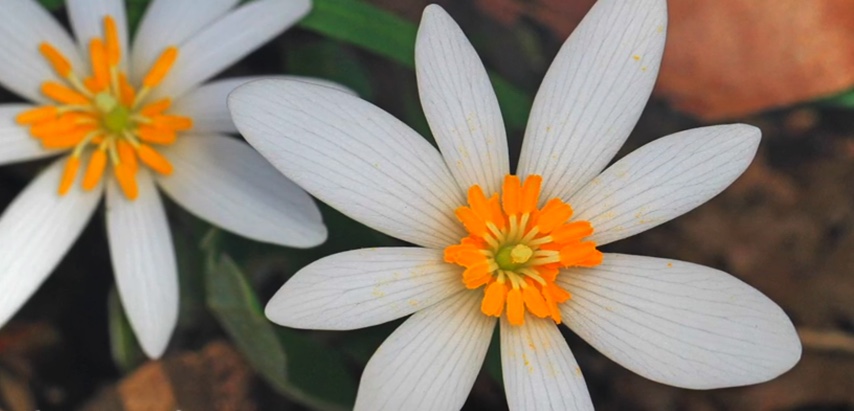
May Wildflower Walk at Red Rocks Park: https://www.youtube.com/watch?v=HHD9SAUzZrA
 Naturalist and songwriter Heidi Wilson just posted her terrific spring ephemerals song on instagram. Here it is for you!
Naturalist Practices
Sit Spots
Julie Pacholik explores the practice of sit spots with the Crow’s Path kids:
From the Appalachian Mountain Club blog: https://www.outdoors.org/from-the-magazine-blog/how-to-keep-a-nature-journal.
And some of the “Hip Pocket Activities” for kids from the Appalachian Trail Conservancy work for sit spots for adults, too: http://www.appalachiantrail.org/home/explore-the-trail/hiking-basics/groups-families-and-pets/hiking-games-and-activities.
Event Maps
This is a free-form approach to mapping that incorporates drawing and writing in real-time while you’re out in the woods. You end up with a not-to-scale “treasure map” of your outing. It’s an excellent way to slow down while you’re outside. A Trail Through Leaves: The Journal as a Path to Place by Hannah Hinchman is the original source. Here is the practiced used with students as described by Laura Yayac:
 Vermont Master Naturalist Program