
By Kate Taylor, VMN Winooski Headwaters participant 2024. Kate reflects on a 2023 weekend Biodiversity University course offered through North Branch Nature Center.
I took an excellent course on “Reading the Landscape” this past weekend through the North Branch Nature Center, Biodiversity University. Led by Alicia Daniel, it was designed to teach us to tune into the different layers of the land, rather than to simply skim the surface. As anyone who reads my blog knows, I’m a fan of the surface.
I love to admire the life in front of me, whether that is a beautiful Shagbark Hickory, a Morbid Owlet Moth or a White Tail Deer (all seen this weekend while we were out and about).
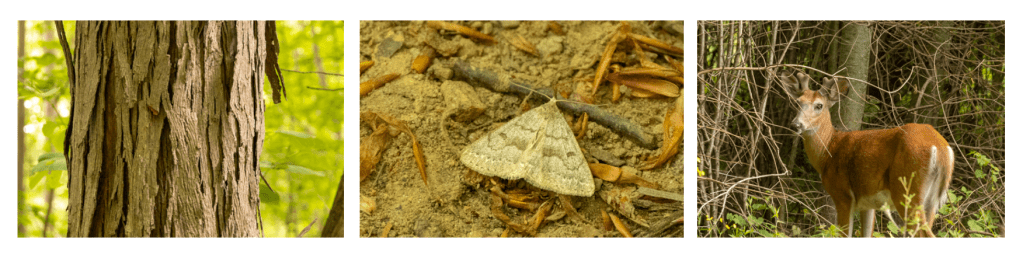
But I’m not used to looking much beyond that. This weekend we began with deep history, starting with the collision of the continents and the creation of the bedrock beneath our feet. I confess, I haven’t spent a great deal of time considering bedrock. But, the shape (ridges, valleys, plains…) and the makeup (clay, shale, sandstone…) of the earth beneath our feet formed hundreds of millions of years ago as the continents collided. That shaped the landscape, influencing everything from the formation of lakes and rivers to the minerals found in the soil.
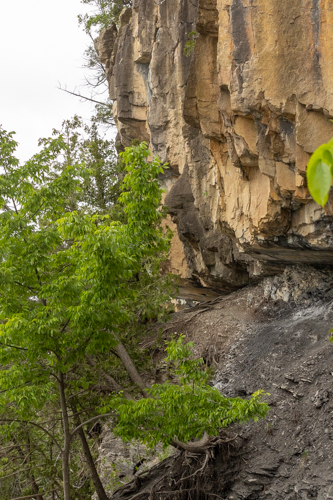
We visited a thrust fault by Lake Champlain where the history of the rocks can be clearly seen by those who know how to look. We considered how the receding waters of Lake Vermont and later the Champlain Sea influenced present day Vermont. From there we looked at the soil composition and how that helps determine the plants and animals than live here.
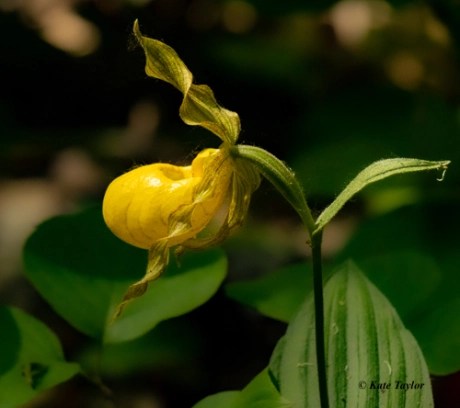
I had never before considered how millions of years of history conspire to create a home for Yellow Lady’s Slippers.
But the weekend wasn’t all deep history.
We also visited the Round Church in Richmond with geographer, Jane Dorney, to look at the cultural history of the land, beginning with the colonial times.
The original inhabitants of this land walked more gently and so leave less evidence of their past. The colonial settlers, on the other hand, cleared land for homesteading, eventually clear cutting much of the forested landscape.

That cutting is one way to view their history, as technology changed, allowing for the move from subsistence farming to farming for profit.
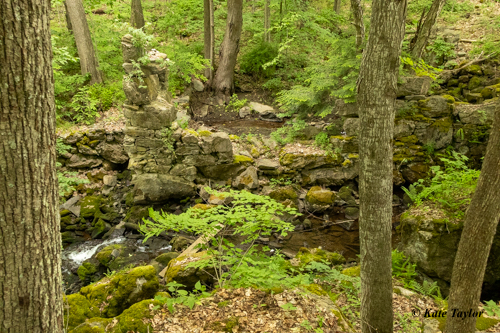
Ruins of an old water-powered mill that was once the height of new technology.
Jane also showed us a beautiful old barn that had been expanded over the centuries, giving a history of farming in it’s beams and floorboards. We talked about how dairy farming is changing still, moving from family farms to large corporate farms. That is also changing our landscape and has an effect on the land and those that live upon it.
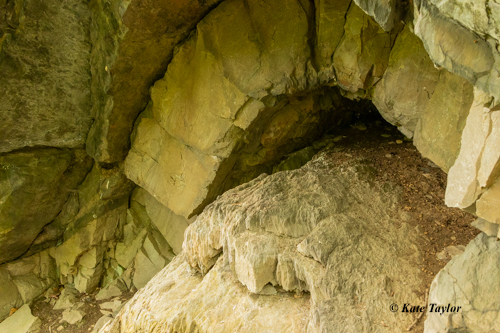
We ended the day with a visit to Raven Ridge where we could put it all together, starting at the boardwalk over a lowland marsh, heading through white cedar to an abandoned beaver pond. Then, up a to a fantastic rock formation, just below a final view overlooking Lake Champlain.

Sometimes, when I stare up at the stars filling the night sky, I feel like a tiny speck in the emptiness of space. This weekend made me realize I also live in a tiny spot of “now” in the vastness of time.
Thanks for looking,
Stay well, be curious, learn things.
Kate
June, 2023
This post was originally published here.
 Vermont Master Naturalist Program